
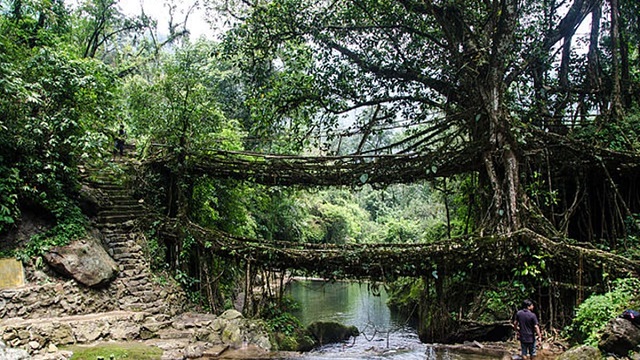
Meghalaya’s Living Root Bridges Nominated for UNESCO
Meghalaya has taken an important step toward getting global recognition for its famous living root bridges. India has officially submitted a nomination to UNESCO to include these bridges in the World Heritage List.
The nomination is titled “Jingkieng Jri / Lyu Chrai Cultural Landscape.” It will be considered during the 2026–27 World Heritage evaluation cycle.
The nomination documents were submitted by India’s Ambassador and Permanent Representative to UNESCO, Vishal V. Sharma. He handed over the dossier to Lazare Assomo Eloundou, the Director of UNESCO’s World Heritage Centre.
The living root bridges are located across the Khasi and Jaintia Hills of Meghalaya. These bridges are made by guiding the roots of rubber trees over rivers and streams. Over time, the roots grow strong and form natural bridges. This process can take many years, but the bridges can last for generations.
These bridges are not just structures for crossing rivers. They are part of a unique living tradition that has been developed and protected by the indigenous Khasi and Jaintia communities for hundreds of years.
The nomination highlights the close connection between the people, nature, and their beliefs. It also shows how local communities manage the land carefully, follow traditional rules, and protect the environment through sustainable practices.
If UNESCO approves the proposal, the living root bridges will gain international recognition.
Officials say this recognition would celebrate Meghalaya’s cultural heritage and its example of living in harmony with nature.