
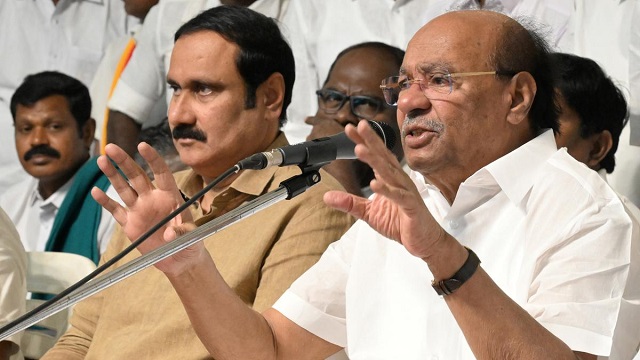
Anbumani Ramadoss Questions PMK Founder’s Administrative Role
Chennai: Former Union Minister Dr. Anbumani Ramadoss has recently stated that his father and founder of PMK (Pattali Makkal Katchi), Dr. S. Ramadoss, who is now 87 years old, is no longer in a position to make administrative decisions for the party due to his age and related health issues.
Dr. Anbumani Ramadoss explained that at the time of PMK’s formation, his father had decided not to hold any formal position or post within the party. Following this decision, the party’s bylaws were drafted in such a way that the founder would not directly manage administrative matters. This was meant to ensure that the party could function smoothly and efficiently even without the founder actively handling day-to-day operations.
According to Anbumani, the party’s structure was deliberately designed to separate leadership from administration. While the founder’s guidance and vision would remain respected, executive decisions and administrative responsibilities were intended to be carried out by other designated leaders. This arrangement was seen as a practical measure to maintain continuity and stability in the party’s operations.
The former Union Minister made these remarks amid ongoing discussions regarding PMK’s current leadership and decision-making processes. His statements have brought attention to the need for clarity in the roles and responsibilities of party leaders, especially when the founder is unable to be actively involved.
Political analysts note that this situation reflects a common pattern in many political parties, where founders gradually step back from active administration as they age. Responsibilities are passed to younger leaders, allowing the party to adapt to new challenges while still retaining respect for the founder as a symbolic and guiding figure.
Observers also point out that such transitions can sometimes lead to internal debates or disagreements over leadership, especially in parties where the founder has had a strong influence on the ideology and functioning. Ensuring smooth succession planning is therefore critical for PMK to maintain unity and continue its political work effectively.
Dr. Anbumani’s remarks may also signal a push for greater involvement of the next generation of leaders within the party, potentially reshaping the way decisions are made and responsibilities are distributed among party officials. As PMK prepares for upcoming political activities and elections, the role of younger leaders is expected to become more prominent, while the founder’s vision continues to guide the party’s overall direction.
With the founder stepping back from active administration, PMK is entering a phase where organizational efficiency, leadership clarity, and strategic planning will be key to sustaining its influence in Tamil Nadu politics.