
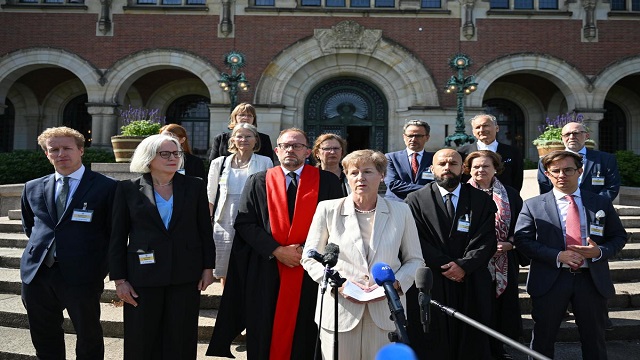
Nicaragua Sues Germany at World Court Over Genocide Allegations
Nicaragua has filed a case against Germany at the International Court of Justice (ICJ), accusing Germany of violating the 1948 Genocide Convention by supplying military equipment and weapons to Israel during the war in Gaza.
Nicaragua argues that Germany’s support for Israel has contributed to the situation in Gaza and that its actions are inconsistent with its responsibilities under international law. The country says Germany should have taken steps to prevent acts that could amount to genocide.
The ICJ previously rejected Nicaragua’s request for emergency measures in the case. However, the court did not dismiss the main case, meaning Nicaragua’s legal claims can still be considered.
Germany has strongly challenged the case and has asked the court to reject it. German lawyers argue that Nicaragua did not properly follow the required legal procedures before bringing the dispute to the ICJ. Germany has also argued that some of the issues raised by Nicaragua fall outside the court’s jurisdiction.
Nicaragua disagrees with Germany’s position. It argues that both countries are members of the Genocide Convention and have accepted the ICJ’s role in resolving disputes related to the treaty. Nicaragua therefore says the court has the authority to examine its claims.
The Genocide Convention, adopted in 1948, was created after the Second World War to prevent and punish genocide. It defines genocide as an international crime and provides a legal framework for countries to bring certain disputes before the ICJ.
Public hearings on Germany’s objections were held from September 7 to September 10, 2026. The court is expected to issue a decision on whether the case can continue.
If the ICJ allows the case to move forward, the legal process could take several years. The court would then have to examine evidence and arguments from both countries before reaching a final decision.
The ICJ often encourages countries to resolve disputes through legal and diplomatic means. A final ruling could have wider political and legal implications, although the court’s proceedings can take a considerable amount of time.
Nicaragua’s case is also connected to wider international legal action over the Gaza conflict. South Africa filed a separate case against Israel at the ICJ in 2023, accusing Israel of violating the Genocide Convention. Israel has rejected the genocide allegations and has also questioned the court’s jurisdiction.
The conflict began after Hamas launched an attack on Israel in October 2023, killing more than 1,200 people and taking hostages, according to Israeli authorities. Israel responded with a major military campaign in Gaza, which has resulted in a very large number of Palestinian deaths and widespread destruction.
A ceasefire that began in October 2025 has allowed some humanitarian assistance to enter Gaza. However, the humanitarian situation remains extremely serious, with continued concerns about access to food, medical care, shelter and other basic necessities.
The case between Nicaragua and Germany is therefore being closely watched because it could examine the responsibilities of countries that provide military support during an armed conflict. The ICJ’s decision on whether the case can proceed will be an important next step in the legal dispute.