
PM Modi Stresses Cybersecurity for Financial Institutions
Prime Minister Narendra Modi has stressed the need to strengthen cybersecurity to protect India’s financial institutions from growing digital threats. He said that modern conflicts are no longer limited to military action, as countries can also face attacks targeting their economies, banking systems and digital infrastructure.
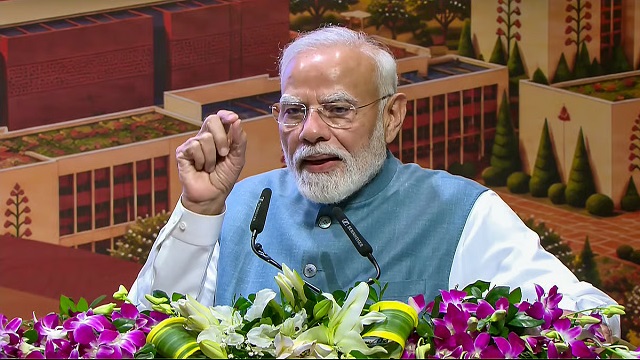
Modi made these remarks while speaking at the inauguration of the Reserve Bank of India’s new data centre and Cybersecurity Training Institute in Bhubaneswar, Odisha. He highlighted the importance of developing advanced technology and training skilled professionals to protect the country’s financial system from cyberattacks.
The Prime Minister said that cyber threats are becoming more complex as banking and financial services increasingly depend on digital platforms. Older security systems may not be sufficient to deal with rapidly changing threats. He emphasised that India must continue investing in modern infrastructure, stronger security measures and specialised training to protect financial data and maintain public confidence in banking services.
The new cybersecurity training institute is expected to help develop professionals with the knowledge and skills needed to identify, prevent and respond to cyber threats. Such training is important as banks and financial institutions handle large amounts of sensitive customer information and process millions of digital transactions.
Modi also highlighted the wider importance of protecting the economy from cyberattacks. He said that attacks on financial institutions could affect businesses, customers and the country’s economic stability. Strengthening cybersecurity, therefore, is an important part of India’s efforts to build a secure and reliable financial system.
During his address, the Prime Minister also discussed the development of India’s banking sector. He criticised previous governments for failing to ensure that banking services reached all sections of society, despite the nationalisation of banks being presented as a way to improve access to financial services.
According to Modi, many people, particularly those from economically weaker sections, continued to face difficulties accessing bank accounts and loans for several years. Limited access to formal banking made it harder for some families and small businesses to save money safely or obtain financial support.
He also referred to problems involving non-performing assets, commonly known as NPAs. These are loans for which borrowers have stopped making the required repayments for a specified period. High levels of bad loans can weaken banks and reduce their ability to provide credit to businesses and individuals.
Modi said that India has made significant progress in expanding access to banking services through initiatives linked to Digital India and wider financial inclusion. Digital platforms have helped more people access financial services, transfer money and make payments without always needing to visit a bank branch.
The expansion of digital banking has also increased the need for stronger security systems. As more people use online banking, mobile applications and digital payment services, protecting their accounts and personal information has become increasingly important.
The Prime Minister also praised Odisha for its economic development and efforts to attract investment in new industries. He highlighted the state’s potential to move beyond its traditional dependence on mining and mineral resources by developing sectors such as electronics and semiconductor manufacturing.
The semiconductor industry plays an important role in producing microchips used in mobile phones, computers, vehicles, communication systems and other modern technologies. Expanding this sector could create new employment opportunities, attract investment and support India’s ambition to strengthen its domestic technology manufacturing capabilities.
Union Finance Minister Nirmala Sitharaman also addressed the event. The inauguration brought attention to the importance of financial infrastructure, cybersecurity and technology-based economic development.
Overall, Modi’s remarks highlighted three major priorities for India: protecting financial institutions from cyber threats, expanding access to banking services and encouraging investment in advanced technology industries. As the country becomes increasingly digital, stronger cybersecurity systems and trained professionals will be essential to protecting financial services and supporting long-term economic growth.