
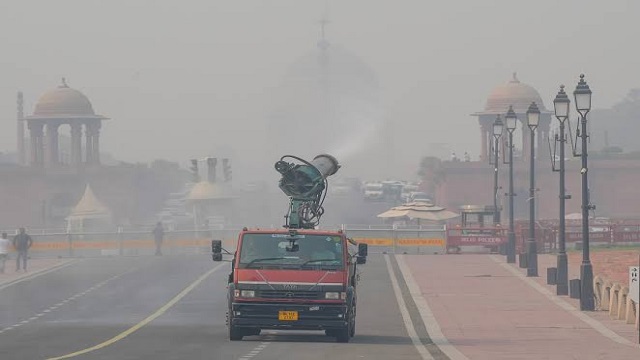
Delhi Faces Severe Air Pollution
Air pollution in Delhi reached the ‘severe’ category on Friday morning, November 13, 2026, raising concerns about public health. According to official data, the capital recorded an Air Quality Index (AQI) of 403 at 9 am. The situation was also serious in nearby areas, with Ballabgarh in Haryana recording severe pollution levels, while Noida, Gurugram and Faridabad reported ‘very poor’ air quality.
Data from the Central Pollution Control Board (CPCB) showed that Delhi’s air quality had worsened significantly over the past few days. On Thursday at 4 pm, the city’s AQI was recorded at 350, compared with 313 on the previous day. This increase indicates a steady deterioration in air quality across the national capital.
The CPCB has predicted that Delhi’s air quality will remain in the severe category throughout Friday night. The worsening pollution has created concerns for residents, particularly children, older people and those with existing breathing or heart-related health problems.
Several seasonal and environmental factors are contributing to the rise in pollution. During winter, lower wind speeds make it difficult for polluted air to move away from the city. Colder temperatures also contribute to the accumulation of pollutants near the ground, allowing harmful particles to remain in the atmosphere for longer periods.
Stubble burning in neighbouring states during October and November is another major contributor to the pollution problem. Smoke from agricultural fields can travel towards Delhi and surrounding regions, adding to the existing pollution. Fireworks during festivals, vehicle emissions and dust from roads and construction activities also contribute to poor air quality.
According to the CPCB, severe pollution levels can have serious effects on human health. Such conditions may affect even healthy individuals, while people with existing medical conditions could experience more serious problems. Exposure to polluted air can increase the risk of breathing difficulties and other health complications.
With pollution levels remaining high, the situation highlights the continuing challenge of controlling air pollution in Delhi and the surrounding regions, especially during the winter season.