
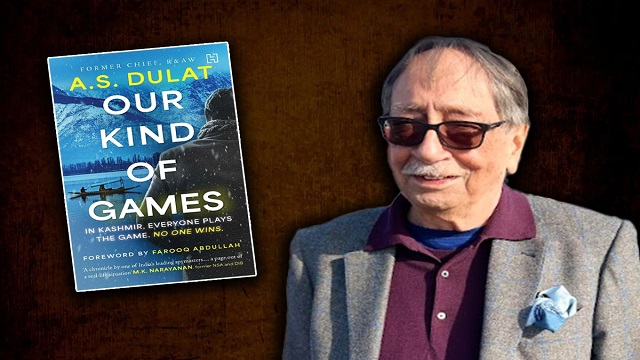
AS Dulat’s Kashmir Game: A Tale of No Victor
Former Indian intelligence officer A.S. Dulat’s book Our Kind of Game takes readers back to the Kashmir conflict of the early 1990s, a period marked by political uncertainty, armed insurgency and rising violence. During this time, Pakistan-backed militant groups were active in the region, creating serious challenges for Indian security and intelligence agencies. Through his account, Dulat provides an insider’s perspective on the difficult situations faced by those working to understand and respond to the conflict.
The book explores the complicated relationship between politics, intelligence operations and armed groups during this period. It describes how Indian intelligence agencies and security forces worked to counter infiltration and militant activities while dealing with changing situations on the ground. Dulat also explains the challenges involved in gathering information, understanding local developments and making important decisions in an environment filled with uncertainty.
One of the important aspects of the narrative is the prolonged nature of the Kashmir conflict. Despite years of security operations and intelligence efforts, the situation remained complicated, with violence continuing to affect the region. The book looks at how the conflict created difficulties for both security personnel and ordinary people, while highlighting the challenges of achieving lasting peace.
Dulat also brings personal experiences and accounts into the narrative, offering readers a different perspective from what is usually presented in official reports. His observations help explain the pressures faced by intelligence officers and the difficulties of working behind the scenes. The book also draws attention to the emotional and human costs of a conflict that affected families, communities and individuals across Kashmir.
Through Our Kind of Game, Dulat revisits an important period in Kashmir’s history and examines the role of intelligence agencies during the early years of the insurgency. The book provides readers with an opportunity to understand the political and security challenges of that time while reflecting on the lasting impact of the conflict on Kashmir and its people.