
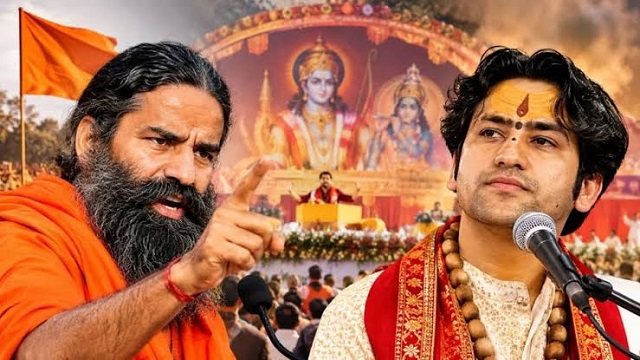
Behind Ramdev-Dhirendra Shastri Feud: A Battle for Political Attention in UP
A public disagreement between two well-known religious figures, yoga guru Baba Ramdev and Bageshwar Dham head Dhirendra Krishna Shastri, has attracted attention in election-bound Uttar Pradesh. The disagreement began after Shastri made comments comparing Hindu gods Lord Ram and Lord Krishna during a public speech. Ramdev criticised his remarks, leading to a debate among religious followers and political observers.
During his speech, Shastri described Lord Krishna as “crooked” and Lord Ram as “straight”. His comments upset several followers of Lord Krishna, particularly members of the Yadav community, who consider Krishna an important religious figure. The remarks quickly became a topic of discussion and faced criticism from different sections of society.
Following the criticism, Shastri issued an apology for his comments. However, the issue continued to attract attention after Baba Ramdev criticised people who made such comparisons, describing them as “hypocrites”. His remarks added to the ongoing disagreement between the two religious leaders.
Ramdev later adopted a softer approach and referred to Shastri as his “younger brother”. This appeared to reduce the directness of the disagreement, although their earlier comments had already become a major topic of public discussion.
Both Ramdev and Shastri are influential religious figures with connections to the BJP. Baba Ramdev is widely known for promoting yoga, Ayurveda and nationalist ideas. He has built a large following across India through television programmes, public events and his business activities. However, his business interests have also faced criticism and disputes in recent years.
Dhirendra Krishna Shastri, who leads Bageshwar Dham in Madhya Pradesh, has gained popularity through religious programmes and public gatherings. His speeches attract large crowds, while his growing social media following has helped him reach a wider audience, particularly among younger people.
The disagreement is taking place at a politically important time, as Uttar Pradesh prepares for its next election. The BJP has been working to maintain support among different caste groups and communities across the state. The Yadav community, in particular, is an important social group in Uttar Pradesh’s political landscape.
Political observers are paying attention to how the disagreement between the two religious figures develops. Their public statements have raised questions about the role of religious leaders in political discussions and the importance of respecting the beliefs of different communities.
As political parties prepare for the election, maintaining support among various caste and religious groups remains an important challenge. The public disagreement between Ramdev and Shastri has brought fresh attention to the relationship between religion, community identity and political influence in Uttar Pradesh.