
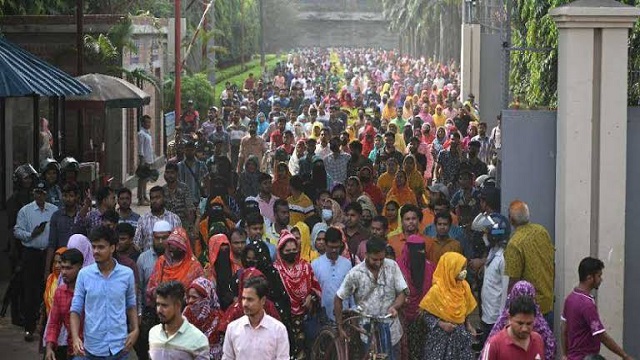
Garment Workers Clash with Police Over Minimum Wage in Bangladesh
Garment workers in Gazipur, Bangladesh, have clashed with police during protests against a proposed minimum monthly wage of Tk 17,000. The workers rejected the proposed amount, saying it was not enough to meet their daily living expenses amid rising prices of food, housing and other essential goods.
Thousands of workers took to the streets to demand better salaries and improved working conditions. Many protesters blocked major highways, causing traffic disruptions in the area. The demonstrations later turned violent, leading to clashes between workers and law enforcement personnel.
Police used tear gas to control the crowds and disperse the protesters. Several workers were also arrested during the unrest. The situation created tension in the industrial area, where many garment factories operate.
The workers are demanding a minimum monthly salary of at least Tk 25,000 instead of the proposed Tk 17,000. They say the higher amount is necessary to manage their household expenses and support their families. Apart from better wages, they are also calling for regular bonuses, social security benefits and safer working conditions.
Garment workers play an important role in Bangladesh’s economy. The country’s garment industry is one of its largest sources of export income and provides jobs to millions of people. However, many workers have raised concerns about low salaries, long working hours and increasing living costs.
Meanwhile, factory owners and business organisations have expressed concerns about the workers’ demands. They argue that a major increase in wages could raise production costs and create financial difficulties for garment companies. Some business groups have warned that factories may be forced to reduce their workforce or even shut down if they cannot manage the additional expenses.
The government is facing pressure to find a solution that meets the needs of both workers and factory owners. Officials must consider the rising cost of living while also protecting the country’s garment industry, which plays a major role in its economy.
The wage dispute continues to highlight the challenges faced by garment workers in Bangladesh. Workers are demanding fair pay and better benefits, while employers are concerned about the financial impact of higher wages. A solution acceptable to both sides will be important to maintain industrial stability and protect workers’ livelihoods.