
Why the Supreme Court Mandates Red Warnings on Unhealthy Packaged Foods
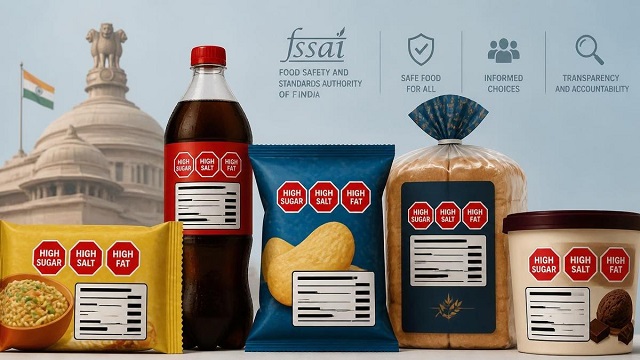
Packaged food products containing high levels of sugar, saturated fat or salt may soon be required to display clear warning labels on the front of their packaging in India. The proposed system aims to help consumers quickly identify products that contain high amounts of nutrients linked to health risks.
The Supreme Court has recently directed the Food Safety and Standards Authority of India (FSSAI) to introduce a simple and clear front-of-pack nutrition labelling system for packaged foods. The court has given the food safety regulator four months to finalise the new rules. It also stressed that public health concerns should be addressed without unnecessary delays.
For many years, India has been discussing ways to make nutritional information easier for consumers to understand. At present, food packages generally provide nutritional details on the back or side of the product. However, many consumers may find it difficult to understand these details while purchasing food items.
The proposed warning label system is expected to make important nutritional information more visible. Large red warning symbols could help shoppers identify products that contain excessive amounts of sugar, saturated fat or salt before making a purchase.
Earlier, the FSSAI had proposed introducing the warning system in two stages. Under the initial proposal, packaged food products containing high levels of two or more unhealthy nutrients would receive warning labels. In a later stage, the rules would also cover products that exceeded the recommended limits for even one of these nutrients.
However, the Supreme Court has now called for a single-phase approach. Under this approach, a product that crosses the prescribed limit for any one of the specified nutrients would be required to display a warning label.
Focus on Consumer Awareness
The proposed changes are intended to make food labels easier to understand, especially for people who do not regularly check nutritional information. Clear warnings on the front of packages could help consumers compare products and make more informed food choices.
High consumption of sugar, saturated fat and salt is associated with several health problems, including obesity, high blood pressure and heart disease. Making this information more visible could encourage people to pay closer attention to their daily food habits.
The FSSAI will now have to work on finalising the regulations within the four-month deadline set by the Supreme Court. Once the rules are finalised, food manufacturers may need to change their packaging to meet the new labelling requirements.
The proposed system marks an important development in India’s efforts to improve food labelling and public awareness about nutrition. The final regulations will determine how warning labels are displayed and which products will be covered.