
Chennai Retains its Position Among the Top 3 Cities in ‘Top Cities for Women in India (TCWI)’ Survey conducted by the Avtar Group
Avtar Group, India’s leading workplace culture consulting firm, released the fourth edition of its annual, nation-wide study ‘Top Cities for Women in India’ (TCWI). The TCWI report presents a longitudinal inclusivity index that tracks how Indian cities enable women’s participation, safety, and career growth/continuity, while identifying role-model cities and emerging best practices. It also offers a structured framework for organisations, policymakers and urban stakeholders to enable women’s workforce participation and career growth.
The Top 10 Cities for Women in India in 2025 are: Bengaluru, Chennai, Pune, Hyderabad, Mumbai, Gurugram, Kolkata, Ahmedabad, Thiruvananthapuram, Coimbatore.
The 2025 edition of the study covers 125 cities and draws comparisons from its previous editions (from 2022). The cities are ranked based on an overall ‘City Inclusion Score’ assigned to every city, which is inferred from Avtar’s research and governmental data. The City Inclusion Score (CIS) is derived from two parameters: the Social Inclusion Score (SIS) and the Industrial Inclusion Score (IIS).
· The Social Inclusion Score is a cumulative score of four indicators. These are: city liveability, safety, women’s representation in employment and women’s empowerment.
· The Industrial Inclusion Score evaluates the extent to which organisations in the city across industries are inclusive of women and is calculated based on three indicators: The density of gender inclusive organizations; the density of women-friendly/inclusive industries in a city, and career enablers provided to women by organizations.
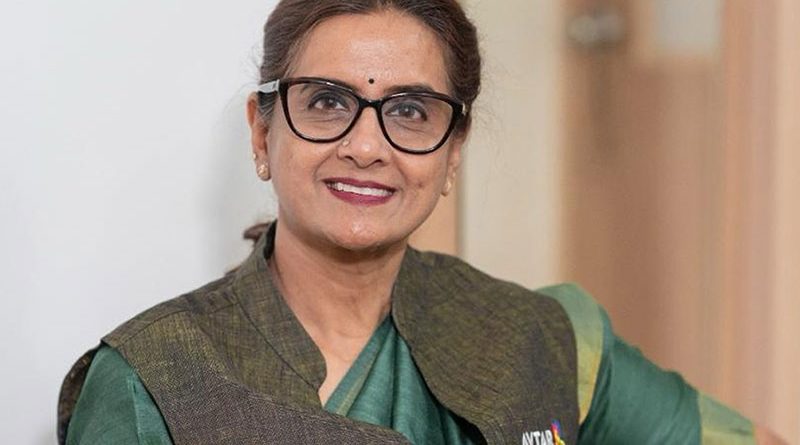
Speaking at the release event of the report’s findings, Dr Saundarya Rajesh, Managing Director of Avtar Group, said, “As we mark Avtar’s 25th year, the fourth edition of the ‘Top Cities for Women in India’ reflects both how far we have come and how much more we must do. Over the years, the TCWI study has evolved into a tool of accountability that asks a simple question: Can a woman truly thrive in this city? It measures the real ease of career and life for women, whether cities enable women to enter the workforce, stay, grow, and lead.
Creating such cities requires shared responsibility. Governments, organizations, institutions, communities, and women themselves must work together to build environments that are safe, accessible, affordable, and supportive. In today’s context, cities must also take a broader view of inclusion, one that considers environmental resilience, supportive infrastructure, digital readiness, intergenerational equity, and respect for diverse perspectives. When these elements come together, women thrive, thereby strengthening local economies and moving India closer to its long-term development goals.”
Key Findings of the Top Cities for Women in India 2025 report:
· Bengaluru retains its position as the top city for women in India in 2025, with a City Inclusion Score of 53.29, reflecting sustained strength in Industrial Inclusion and career enablement.
· Chennai follows in second position with a City Inclusion Score of 49.86, while continuing to lead on social inclusion parameters such as safety mechanisms, public services, mobility initiatives and access to health and education.
· Pune (46.27), Hyderabad (46.04), and Mumbai (44.49) complete the top five, demonstrating consistent performance across both social and industrial inclusion indicators.
· Gurugram records one of the most notable upward movements, strengthening its position in 2025 compared to 2024, supported by rapid industrial growth and strong corporate presence (Rank no. 6 in 2025 compared to No. 9 in 2024).
· Delhi, Gurugram, and Noida perform strongly on industrial inclusion but lag on social indicators such as safety, affordability, and mobility, reinforcing that industrial growth alone does not ensure inclusive urban environments.
· Thiruvananthapuram, Shimla and Tiruchirappalli demonstrate strong social inclusion outcomes but limited industrial depth, pointing to constraints in local economic mobility for women and limitations in large-scale formal employment opportunities for women despite strong social foundations.
· Hyderabad, Kolkata and Pune stand out for fairly balanced inclusion profiles, with strong alignment between social inclusion and industrial ecosystems, enabling sustained workforce participation for women.
· Mumbai shows strong industrial inclusion (with an IIS of 69.00) but relatively weaker social inclusion (with a SIS of 38.44), highlighting challenges around affordability and access to infrastructure despite abundant employment opportunities.
· The 2025 TCWI rankings show increased representation of Tier – 2 cities among higher ranks, indicating decentralisation of women-friendly urban ecosystems.
Regional analysis:
· The Southern region emerges as the most inclusive, recording the highest scores across all three indices, with a regional average CIS of 21.60, SIS of 27.81, and an IIS of 11.61, reflecting a more integrated approach to social infrastructure, safety, health, education, and industrial participation for women.
· The Western region follows closely, demonstrating consistently strong performance with a regional average CIS of 20.00, SIS of 25.47, and the highest IIS among regions at 12.01, indicating relatively mature industrial ecosystems supported by enabling social conditions.
· Central and Eastern regions trail across both inclusion dimensions – social and industrial – especially industrial inclusion, with regional average IIS scores of 4.96 and 4.40, respectively.
Across 2022–2025, cities achieving convergence between Industrial Inclusion (IIS) and Social Inclusion (SIS) consistently rank higher on overall City Inclusion (CIS), reinforcing that industrial growth is most effective when supported by safe, accessible, and equitable urban environments.
For more details, refer to the Top Cities for Women in India 2025 report: https://www.avtarinc.com/tcwi/