
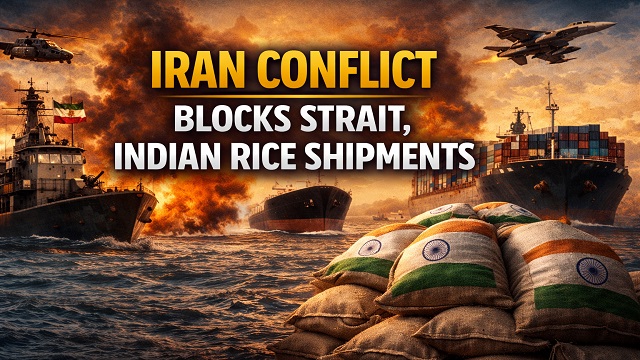
Iran Conflict Blocks Strait, Indian Rice Shipments
About 400,000 metric tons of Indian basmati rice are currently stuck in transit because the conflict in Iran has disrupted shipping routes across the Middle East, according to trade officials cited by Reuters on Tuesday. The situation has also caused freight costs to rise sharply, with container shipping rates more than doubling since the weekend strikes.
Export deals have slowed down or stopped completely as the ongoing conflict makes it difficult to move goods safely. On Monday, Iran’s Islamic Revolutionary Guard Corps closed the Strait of Hormuz to shipping traffic and warned that any ship attempting to pass through the strait would be attacked, according to Iranian state media.
It connects the Persian Gulf to global sea lanes, allowing commercial cargo, including oil and container shipments to Asia, to pass through efficiently. Disruption in this narrow waterway has serious consequences for global trade.
The United Arab Emirates, including the city of Dubai, is located just outside the strait and acts as a major transshipment hub for goods traveling through the Middle East. While Saudi Arabia and the UAE have some limited pipeline routes that bypass the strait for oil shipments, most cargo ships, including container vessels, have no easy alternative if the Strait of Hormuz remains blocked, according to the U.S. Energy Information Administration.
The blockade is expected to create delays and financial losses for exporters, including Indian businesses relying on the strait for shipping rice, oil, and other goods. Trade experts warn that unless the situation stabilizes, global supply chains and shipping costs could face further disruptions.