
Tamil Nadu Strengthens Chennai Coast with Mangroves
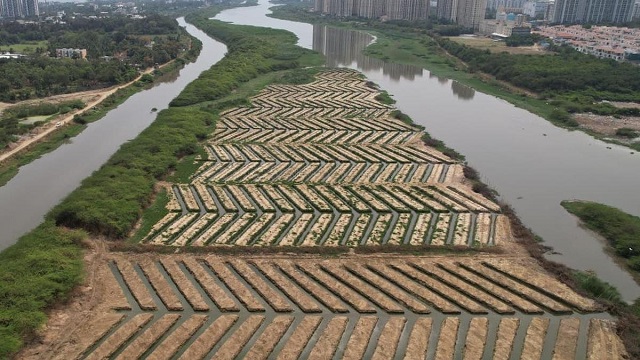
The Tamil Nadu Forest Department has successfully planted 20,000 mangrove seedlings across 20 hectares along the Buckingham Canal during 2025–26. This initiative is part of a larger effort to strengthen Chennai’s coastal ecosystem and enhance the city’s resilience to climate change. Mangroves play a critical role in protecting coastal areas, and this plantation drive reflects the government’s commitment to preserving the city’s natural defenses.
Sharing the details on X (formerly Twitter), Additional Chief Secretary Supriya Sahu, who oversees Environment, Climate Change, and Forests, explained that a “fishbone” canal system was created at the site to ensure proper tidal flow. The fishbone pattern consists of small branching canals, which allow seawater to flow freely into the mangrove areas. This is crucial because tidal movement supplies oxygen and nutrients, which help mangroves grow strong and healthy.
Mangroves are vital to coastal protection. They reduce erosion by stabilizing the shoreline, serve as nurseries for fish and habitats for birds and other wildlife, and absorb large amounts of carbon dioxide, helping combat climate change. In addition, healthy mangroves act as natural buffers against storms and rising sea levels, offering protection to nearby communities.
Officials involved in the project have also focused on maintaining the long-term sustainability of the mangroves. Regular monitoring, cleaning of canals, and ensuring proper water flow are all part of the management plan. Over time, these mangrove forests are expected to become a thriving ecosystem, supporting both wildlife and local communities that depend on fishing and other coastal resources.
With this large-scale plantation drive, Chennai is taking a significant step toward a greener, safer, and more climate-resilient coastal environment. The project also highlights the importance of community engagement and scientific planning in protecting urban ecosystems.