
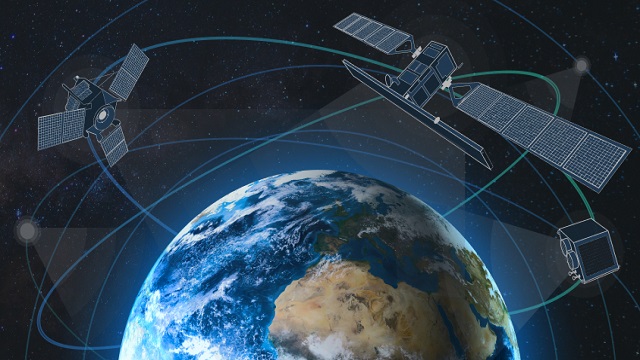
“Why Satellites Stay in Orbit Around Earth”
There are more than 13,000 satellites from different countries orbiting around Earth. You might wonder why these satellites don’t fall back to the ground, even though Earth’s gravity is constantly pulling on them. How do they stay up there for years without crashing?
The secret lies in a delicate balance between two forces: gravity and speed. Gravity constantly pulls the satellite toward Earth. At the same time, the satellite is moving forward very fast—so fast that as it falls, it also moves sideways. This forward motion causes it to circle the Earth instead of hitting it. In other words, satellites are always falling toward Earth, but because the planet is curved, they keep missing it. This creates a continuous path around the planet, which we call an orbit.
Many people think satellites are “hovering” in one place, but that’s not true. They are in a state called free-fall, which means they are falling toward Earth but never land because they are moving forward fast enough to stay in orbit. This is why satellites can travel around the Earth thousands of times without ever plummeting down.
In short, satellites stay in space thanks to the perfect balance of gravity pulling them down and their high speed pushing them forward, creating a smooth, endless journey around our planet.