
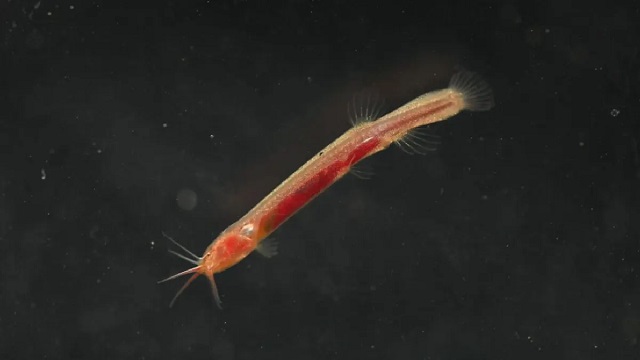
Scientists Discover Rare Underground Fish in Assam
An international team of researchers from Germany, India, and Switzerland has discovered a strange and rare new species of fish living in a hand-dug well in a village in Assam. The fish, named Gitchak nakana, is remarkable because it lives in underground water sources called aquifers.
This discovery is significant for science because it is the first time a fish that lives in aquifers has been documented in Northeast India and the Eastern Himalayan region. The finding opens up new possibilities for studying underground ecosystems and understanding how species survive in hidden habitats.
The research was published recently in Scientific Reports, a journal from the Nature portfolio. The international team of scientists included:
Ralf Britz and Amanda Pinion from the Senckenberg Museum, Dresden, Germany
Rajeev Raghavan from Kerala University of Fisheries and Ocean Studies (KUFOS), Kochi, India
Wimarithy Marak and Kangjam Velentina from Assam Don Bosco University, Guwahati
Yumnam Lokeshwor from Dhanamanjuri University, Manipur, India
Lukas Rüber from the Natural History Museum, Bern, Switzerland
The discovery of Gitchak nakana is not only a new addition to the world’s biodiversity but also highlights the importance of studying lesser-known habitats in India. Scientists hope further research on this unique fish will reveal more about its behaviour, diet, and how it has adapted to life underground.
This exciting finding demonstrates that even common-looking places like village wells can hide extraordinary creatures yet to be discovered.