
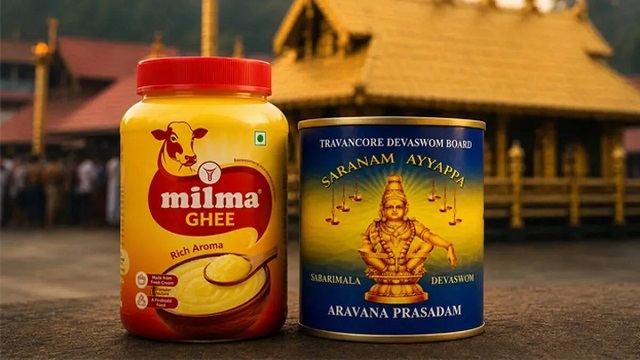
Sabarimala Ghee Controversy Explained
Sabarimala has once again become the center of public attention. A few months ago, the famous temple was in the news because of rumors about a gold theft. Now, it is making headlines again, this time over the ghee used in one of its most important religious rituals.
For thousands of devotees from Kerala and other parts of India, preparing neythenga is an important part of the Sabarimala pilgrimage. Neythenga is made by filling a coconut with pure ghee before beginning the journey to the temple. Devotees carry this offering with great faith, believing it represents their devotion to Lord Ayyappa.
When pilgrims reach the temple, the ghee from the coconut is used for Neyyabhishekam, a sacred ritual in which the ghee is poured over the idol of Lord Ayyappa. After the ritual, the empty coconut shell is offered as part of the temple tradition. This practice has been followed for generations and is considered one of the most meaningful parts of the pilgrimage.
The latest issue regarding the ghee used for this ritual has led to discussions and concerns among devotees. Many people believe that the purity and proper handling of the ghee are very important because of its religious significance. As a result, the matter has attracted public attention and sparked debate among pilgrims and temple followers.
Devotees hope that any concerns related to the ritual will be addressed carefully while respecting the long-standing traditions of Sabarimala. The temple remains one of the most important pilgrimage sites in India, and millions of people continue to visit every year with deep faith and devotion.