
Turkey Parliament Approves Conditional Pardon for Kurdish Fighters
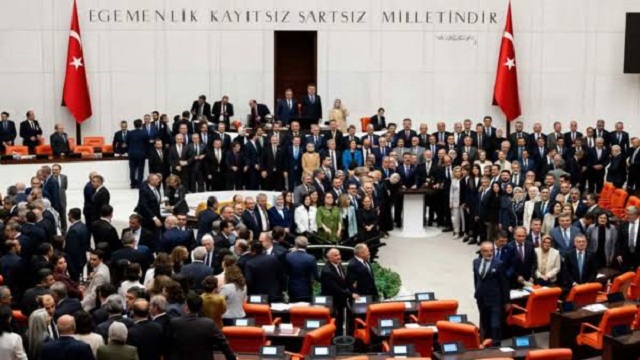
Turkey’s Parliament has approved a new law that could provide a conditional pardon to thousands of Kurdish fighters as part of a wider effort to end a decades-long conflict with the Kurdistan Workers’ Party (PKK).
The law was approved by a large majority in Parliament. However, the pardon will not automatically apply to all fighters. The measure is linked to the PKK’s decision to completely disarm and end its armed activities.
The move is being seen as an important step in Turkey’s efforts to build a new relationship with the PKK and support a possible peace process.
PKK Promises to End Armed Conflict
The PKK announced last year that it planned to end its long-running armed struggle against the Turkish state and dissolve the organisation. The announcement followed calls from its imprisoned leader, Abdullah Ocalan, for the group to move toward ending the conflict.
The PKK and Turkey have been involved in a conflict for decades. The violence has resulted in thousands of deaths and has affected communities in southeastern Turkey and surrounding areas.
The latest law could provide a path for some fighters to return to normal civilian life if the conditions of the peace process are met.
Disarmament Is a Key Condition
The most important condition of the new law is that the PKK must fully disarm. This means the organisation would have to end its armed activities and give up its weapons as part of the process.
Turkey has made it clear that any legal benefits for fighters will depend on the progress of the disarmament process.
The government is expected to monitor whether the conditions are being followed before the pardons take effect.
A Major Step Toward Peace
The decision is significant because the conflict has continued for many years and has created deep political and social divisions.
Supporters of the new law believe it could create an opportunity to end the violence and begin a new period of dialogue. They argue that allowing fighters to return to civilian life under clear conditions could help reduce tensions.
At the same time, the process could face difficulties. Questions about disarmament, the future of former fighters, and political disagreements could make the peace process complicated.
Possible Impact on Iraq
The move could also affect Turkey’s relationship with Iraq. The PKK has operated from areas in northern Iraq for many years, and Turkey has carried out military operations against the group in the region.
If the peace process succeeds and the PKK ends its armed activities, it could reduce tensions involving Turkey and Iraq. It could also create opportunities for greater cooperation between the two countries on security and regional stability.
Impact on Syria
The development may also have consequences for Syria.
Turkey has long been concerned about Kurdish-led groups operating in northern Syria because it considers some of these groups to be connected to the PKK. Syria’s government has also been discussing ways to bring areas previously controlled by Kurdish-led forces under greater state control.
A successful peace process in Turkey could influence these discussions and potentially support efforts to integrate Kurdish-led areas into Syria’s wider political and security system.
A Difficult Road Ahead
Although the new law is an important development, it does not guarantee an immediate end to the conflict. The success of the process will depend on whether the PKK follows through with its commitment to disarm and dissolve.
Turkey will also need to manage the legal and political issues surrounding former fighters and Kurdish communities.
For now, the parliamentary decision represents one of the most significant attempts in years to find a peaceful solution to the conflict. If the conditions are successfully met, the move could reduce violence, improve relations between different communities, and have wider effects across Turkey, Iraq, and Syria.
The coming months will be important in determining whether the new policy can turn the long-running conflict into a lasting peace process.