
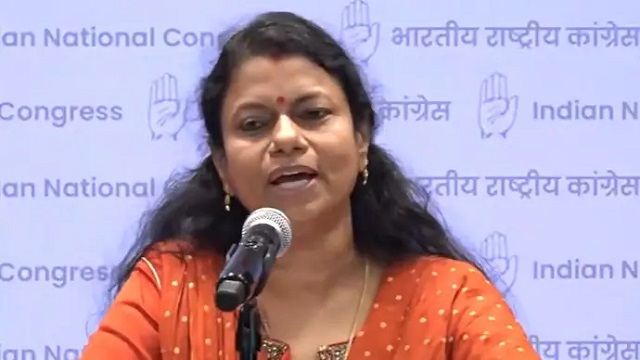
Kerala Women MLAs Walk Out of NCW Workshop Over Hindi-Only Sessions
A group of women lawmakers from Kerala reportedly walked out of a workshop organised by the National Commission for Women (NCW) in Faridabad. The lawmakers said they were unhappy because most of the sessions at the event were conducted in Hindi.
The workshop was organised to discuss issues related to women in public life and other matters connected to women’s representation and leadership. Several women representatives from different parts of the country attended the programme.
However, the Kerala MLAs reportedly raised concerns over the language used during the sessions. They said that many of the discussions were held mainly in Hindi, making it difficult for participants who were not comfortable with the language to fully understand and take part in the proceedings.
Following their concerns, the Kerala lawmakers decided to leave the workshop. Their walkout quickly became a political issue, with questions being raised about whether national-level programmes should provide adequate language support for representatives from different states.
Congress MP Shashi Tharoor criticised the central government over the incident. He said the issue showed a lack of understanding of the principles of cooperative federalism.
Tharoor argued that India is a country with many languages and cultures, and national institutions should take this diversity into account while organising programmes involving elected representatives from different states.
The incident has also renewed the debate over the use of Hindi in official programmes. While Hindi is widely spoken across several parts of India, many southern and northeastern states have their own major regional languages. Representatives from these states have often raised concerns when Hindi is used as the main language without proper translation facilities.
The Kerala lawmakers’ decision to leave the workshop has therefore drawn attention to the importance of providing equal participation for representatives from different linguistic backgrounds.
The controversy may also lead to further discussions about how central government bodies conduct workshops and meetings involving state-level elected representatives. Providing interpretation or translation facilities could help participants understand discussions and contribute more effectively.
The incident has once again highlighted the sensitive nature of language issues in Indian politics. It also raises questions about how national institutions can balance the use of Hindi with India’s wider linguistic diversity.