
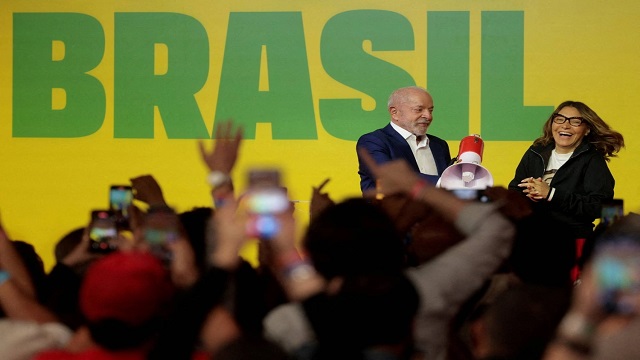
Lula’s Comeback: Overcoming Obstacles
Brazilian President Luiz Inacio Lula da Silva appeared to be facing defeat after the first round of the presidential election. Having completed his third term, Lula was trailing his rival Flavio Bolsonaro, who received 47% of the votes compared with Lula’s 45.2%. The election also saw a high number of people staying away from voting. The abstention rate reached 21%, the highest level since 1998.
However, Lula’s political situation changed dramatically over the following three weeks. A series of protests against Bolsonarism helped create a new political atmosphere across Brazil and gave fresh energy to the opposition movement.
Soon after the first round of voting, thousands of students from Fluminense Federal University marched through the streets of Niteroi. Their main aim was to express opposition to Bolsonarism, the political movement associated with the Bolsonaro family.
The protests continued to grow, with young people gathering at Candelaria Square in Rio de Janeiro. Similar demonstrations soon appeared in several other Brazilian cities, showing that opposition to the movement was spreading beyond a single location.
One important feature of these protests was that participants did not carry political party flags. Their gathering was not mainly about supporting Lula or his political party. Instead, they came together because of their opposition to Bolsonarism.
Bolsonarism is widely associated with far-right political ideas, including strong measures against crime and policies that critics believe could limit civil liberties. The protesters expressed concerns about the movement’s influence and its possible impact on Brazilian democracy.
The newspaper O Globo described the demonstrations as the return of the Left to the streets after more than a decade. The protests created a visible public movement and brought political issues back into the centre of public discussion.
Lula’s unexpected comeback highlighted the importance of public opinion and political movements during elections. The growing protests against Bolsonarism helped change the political atmosphere and created new momentum during the campaign.
The developments showed how public demonstrations, especially those led by young people, can influence political discussions and reshape the direction of an election.