
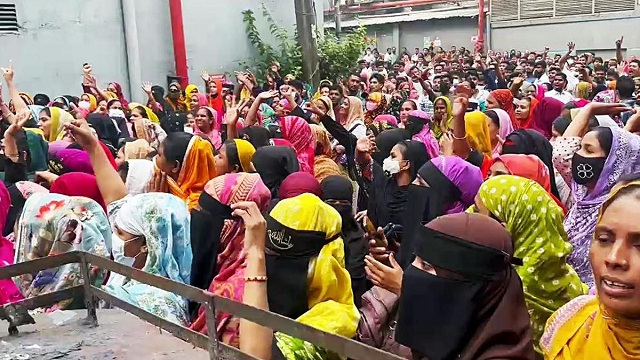
Garment Workers Protest in Bangladesh for Higher Wages
Bangladesh’s garment industry is facing continued labour unrest as workers demand an increase in the minimum monthly wage from 12,500 taka to 30,000 taka. Protests and factory closures have disrupted production in several industrial areas, raising concerns about the country’s important export sector.
Thousands of garment workers have taken part in demonstrations, demanding better pay to cope with rising living costs. They say their current wages are not enough to meet essential expenses such as food, housing, transport and healthcare.
The unrest has affected major garment manufacturing centres, including Dhaka, Savar, Ashulia and Gazipur. Factory closures and road blockades have disrupted production and raised concerns about delays in export shipments.
Factory owners have expressed concern about the proposed wage increase, saying that a sharp rise in labour costs could put additional pressure on businesses already facing higher operating expenses and strong international competition. Industry representatives have also warned that prolonged protests and factory closures could affect orders and payments from overseas buyers.
Meanwhile, labour unions and activists have supported the workers’ demand for better wages and working conditions. They argue that employees should receive fair compensation for their contribution to Bangladesh’s economy.
The government has formed a six-member wage board to review workers’ salaries and recommend a revised pay structure. Officials have urged workers and factory owners to resolve the dispute through discussions and allow production to continue.
Bangladesh’s ready-made garment industry employs around four million people and contributes more than 80 per cent of the country’s export earnings. The ongoing wage dispute has highlighted the challenge of protecting workers’ livelihoods while maintaining the competitiveness of the industry.