
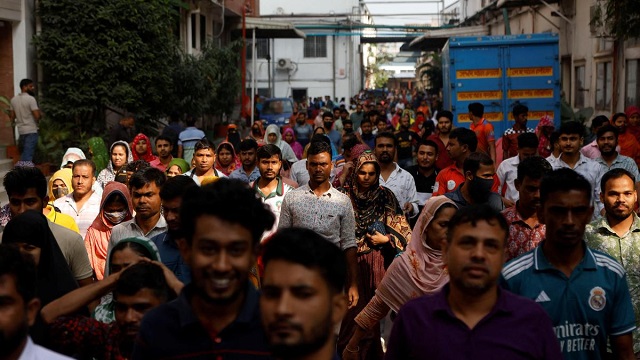
Bangladesh Garment Workers Win 36% Wage Increase
Garment workers in Bangladesh have secured a 36% increase in their minimum wages following months of negotiations and widespread protests. The new minimum monthly wage has been fixed at 17,000 taka (around $139). The revised wage came into effect after workers staged protests demanding better salaries to manage the rising cost of living.
The protests began in October, with thousands of garment workers calling for a significant increase in their monthly pay. Many workers said their existing salaries were not enough to meet their daily expenses, including food, rent, transport and other basic needs. They initially demanded a minimum monthly wage of 30,000 taka (around $240).
The wage increase was approved following a vote by a government-appointed wage board, which was responsible for reviewing workers’ salaries and recommending a revised minimum wage. Although workers welcomed the 36% increase, they said the new amount was still below their original demand.
The previous minimum wage revision had taken place five years earlier. However, the latest increase was introduced earlier than expected due to the growing protests and demands from workers for better pay and working conditions.
Bangladesh’s garment industry plays a major role in the country’s economy. The sector earns around $38 billion every year and contributes nearly 80% of the country’s total exports. It also provides employment to millions of workers, making it one of the country’s most important industries.
However, the recent protests and factory disruptions have caused major financial losses for the industry. The estimated losses have reached around $428 million. Reports also indicate that orders worth approximately $254 million were shifted to other countries as international buyers looked for alternative suppliers ahead of the Christmas shopping season.
Bangladesh’s garment factories manufacture clothes for several international brands, including Fruit of the Loom and Levi Strauss. The protests and production delays raised concerns about the industry’s ability to complete international orders on time.
Following the announcement of the new minimum wage, workers’ representatives called on employees to remain calm and return to their factories. While many workers were not completely satisfied with the revised salary, they acknowledged that the increase was an important step towards improving their earnings.
The wage agreement marks a significant development for Bangladesh’s garment workers. However, discussions about living costs, fair wages and better working conditions are likely to continue as workers seek further improvements in their standard of living.