
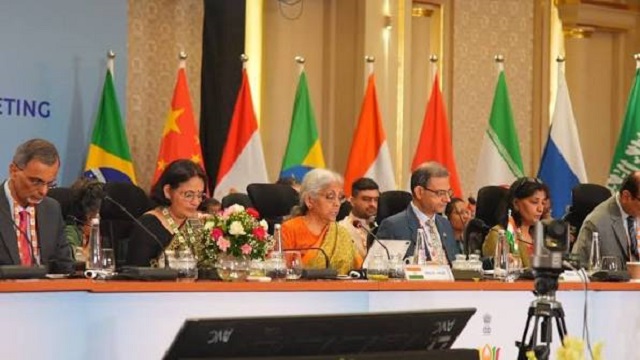
India’s BRICS Chairship Focuses on People and Humanity
India has placed a people-centric approach at the centre of its BRICS chairship, with a focus on cooperation that can provide real benefits to people across member countries.
Speaking at the BRICS Civil Forum 2026 in New Delhi, India’s Economic Relations Secretary Sudhakar Dalela highlighted the importance of working together to address challenges that directly affect people’s lives.
Under India’s leadership, BRICS has focused on areas such as sustainable development, education, healthcare and digital inclusion. These areas are seen as important for improving living standards and creating more opportunities for people in developing countries.
India has also stressed the need for collective action to address major global challenges. These include poverty, climate change, economic inequality and international security.
The people-centric approach means that cooperation between BRICS countries should not remain limited to government-level discussions. Instead, policies and programmes should lead to practical benefits for ordinary citizens.
Education is one of the important areas of focus. Greater cooperation between BRICS countries could help improve access to knowledge, skills and new learning opportunities. Sharing technology and educational resources can also support young people and workers.
Healthcare is another major priority. BRICS countries face several common health challenges, and cooperation can help nations share knowledge, technology and best practices. Stronger health systems can improve access to medical services, especially for vulnerable communities.
Digital inclusion is also receiving attention. As technology becomes an important part of everyday life, access to digital services can help people with education, employment, banking and government services. India has highlighted the importance of ensuring that technological progress benefits people from all sections of society.
Climate change and sustainable development are also key areas of cooperation. BRICS countries are working to find ways to support economic growth while protecting the environment and reducing the impact of climate change.
The BRICS Civil Forum provides an important platform for civil society groups, experts and other stakeholders to discuss these issues. It allows participants to share ideas and suggest ways to make BRICS cooperation more effective.
The forum also encourages discussions about how governments can work more closely with citizens and civil society organisations. Such participation can help ensure that policies reflect the needs of communities.
India’s BRICS chairship comes at a time when many countries are facing economic, environmental and social challenges. India believes that cooperation among BRICS members can help create practical solutions to these problems.
The focus on people is also aimed at strengthening unity among BRICS nations. By working together on common challenges, member countries can support sustainable growth and improve opportunities for their populations.
India’s approach highlights the idea that international cooperation should ultimately improve the lives of ordinary people. Through efforts in education, health, digital access, poverty reduction, climate action and peace, the BRICS grouping aims to build a more inclusive and sustainable future.