
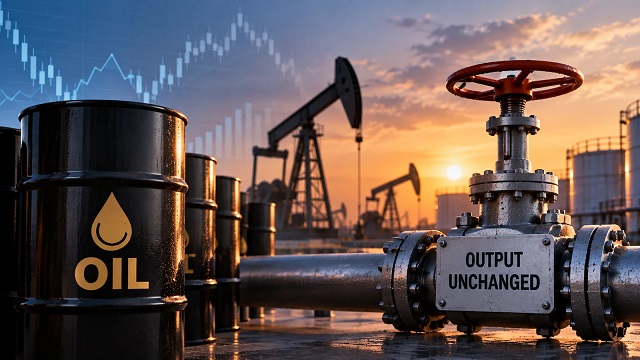
Seven OPEC+ Countries Maintain October Oil Policy
The seven key OPEC+ oil-producing countries—Saudi Arabia, Russia, Iraq, Kuwait, Kazakhstan, Algeria, and Oman—have decided to keep their oil production policy unchanged for October.
The countries held a virtual meeting to review the current situation in the global oil market. During the meeting, officials discussed oil demand, production levels, economic conditions, and expectations for the coming months.
After reviewing the available information, the countries decided not to make any major changes to their planned oil production for October. The decision comes at a time when the global economy continues to face several uncertainties.
Oil prices are closely linked to global economic activity. When economies grow, demand for fuel and other petroleum products generally increases. However, concerns about economic growth can create uncertainty about future oil demand. OPEC+ members therefore regularly review market conditions before making decisions about production.
The decision to maintain the existing policy is aimed at providing stability to the oil market. A sudden increase or decrease in production could have an impact on global oil supplies and prices. By keeping the policy unchanged, the countries appear to be taking a cautious approach while watching how the market develops.
Saudi Arabia and Russia are among the most important members of the OPEC+ group and play a major role in global oil production. Other participating countries, including Iraq, Kuwait, Kazakhstan, Algeria, and Oman, also contribute significantly to the group’s overall supply.
The members are expected to continue monitoring global economic developments, oil demand, and market conditions. If there are major changes in the market, the group could review its production plans in future meetings.
The decision is also important for major oil-consuming countries, businesses, and consumers. Changes in global oil supply can affect crude oil prices, which can in turn influence fuel prices, transportation costs, and the wider economy.
For now, the seven countries have chosen to maintain their existing approach for October. Their decision shows that OPEC+ members are taking a careful approach as they assess the uncertain global economic environment and try to maintain balance in the oil market.