
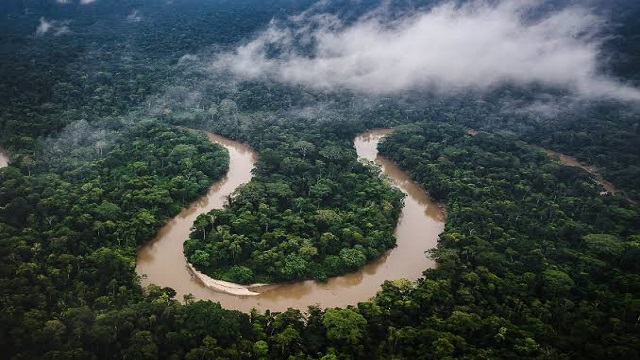
A ‘super’ El Niño could transform the Amazon. Is the world’s biggest rainforest doomed?
A powerful El Niño could create serious problems for the Amazon rainforest, one of the most important ecosystems in the world. Scientists are concerned that another period of extreme heat and drought could further weaken the forest, which is already facing the effects of climate change and deforestation.
El Niño is a natural climate event that begins when large areas of the Pacific Ocean become unusually warm. This warming can change weather patterns around the world. In the Amazon region, El Niño often brings less rainfall and longer periods of dry weather.
Amazon Already Under Pressure
The Amazon experienced severe drought during the 2023–2024 El Niño event. River levels fell sharply, forests became extremely dry, and the region experienced one of its worst fire seasons in decades.
The effects of that drought have not completely disappeared. Satellite observations have shown damage across parts of the rainforest, and some areas may need many years or even decades to fully recover.
A new and very strong El Niño could arrive before the damaged areas have had enough time to recover. Another drought could place additional stress on trees and plants that are already weakened.
Risk of More Fires
Dry conditions also increase the risk of wildfires. When forests lose moisture, fires can spread more easily and burn larger areas.
Fires can cause long-term damage to the Amazon. Once an area has burned, it can become more vulnerable to future fires. Repeated burning can reduce the number of trees and allow grasses and other vegetation to take their place.
This can create a cycle in which forests become increasingly dry and easier to burn.
Scientists Warn About a Tipping Point
Researchers are particularly concerned about the possibility of an Amazon “tipping point.” This refers to a situation where environmental changes become so severe that large parts of the rainforest can no longer maintain their natural forest ecosystem.
If temperatures continue to rise and deforestation continues, some parts of the Amazon could become much drier. Over time, this could cause forests to change into savannah-like landscapes or severely degraded land.
The southern Amazon is considered especially vulnerable because it has already experienced significant deforestation, warming, and changes in rainfall.
Why the Amazon Matters
The Amazon is home to an enormous variety of plants and animals. It also plays an important role in storing carbon and influencing rainfall across South America.
Large-scale forest loss could therefore affect much more than wildlife. Changes in the Amazon could influence regional weather, agriculture, water supplies, and the global climate system.
Scientists are still unsure whether the Amazon has already crossed a major tipping point or exactly how close different parts of the forest may be to one.
However, there is growing concern that another powerful El Niño could push already damaged areas closer to permanent change.
Protecting remaining forests, reducing deforestation, preventing uncontrolled fires, and limiting global warming could help improve the Amazon’s ability to survive future climate extremes.
The coming years will be important. If another severe drought arrives while the rainforest is still recovering, the damage could become much harder to reverse.