
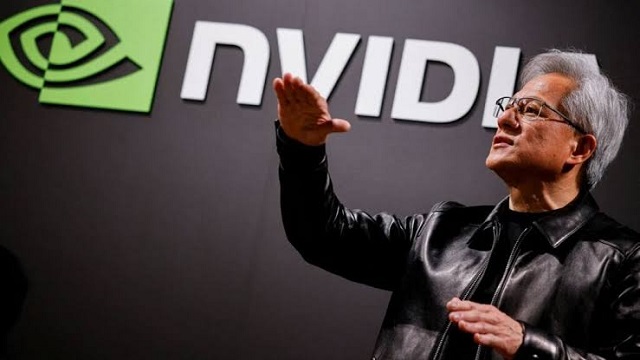
Nvidia Loses $1.6 Trillion as Shares Enter Bear Market
Nvidia, one of the world’s leading technology companies, has lost approximately $1.6 trillion in market value since reaching its record high in October. The sharp decline has attracted attention in global financial markets, as the amount lost is roughly equal to one-third of India’s annual Gross Domestic Product (GDP), estimated at around $4.06 trillion.
According to the reported figures, Nvidia’s market capitalisation fell to approximately $4.31 trillion at the close of trading on November 9. This represents a significant drop from around $5.88 trillion when the company’s shares reached their 52-week high. The decline of nearly $1.57 trillion is larger than the entire market value of Tesla, which stands at approximately $1.49 trillion.
Nvidia’s shares have fallen by more than 26 per cent from their 52-week high of $243.37, officially placing the stock in what financial experts call bear-market territory. On November 9, the shares closed at $178.67. The stock has declined around 14 per cent in the past week and 22 per cent over the past month.
A bear market generally refers to a decline of 20 per cent or more from a recent peak. This indicates a significant fall in the stock’s value and reflects growing concerns among investors.
The decline comes amid uncertainty about future spending on artificial intelligence (AI). Nvidia plays a major role in supplying advanced computer chips used to develop and operate AI systems. Investors are closely watching whether demand for these chips and spending on AI infrastructure can continue growing at the expected pace.
The company is also facing increased attention surrounding its CEO, Jensen Huang, following reports of an investigation involving a suspected foreign intelligence operation. These developments have added to concerns surrounding the company.
Investors are now looking ahead to Nvidia’s quarterly financial results, scheduled for November 17. The upcoming announcement is expected to provide further information about the company’s business performance, chip demand, and future growth outlook.