
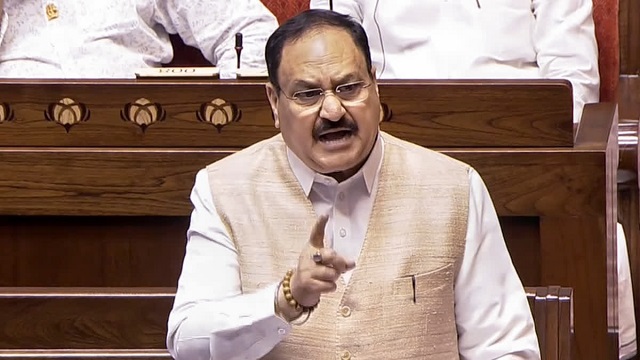
Nadda Accuses Opposition of Disrupting Rajya Sabha
Union Minister J. P. Nadda on Monday (March 9, 2026) criticised Opposition parties for what he described as “petty politics” and creating “anarchy” in Parliament. His remarks came after members of the Indian National Congress and other Opposition parties disrupted the proceedings of the Rajya Sabha during a statement by External Affairs Minister S. Jaishankar.
The disruption happened when Jaishankar was delivering a suo motu statement on the ongoing situation in West Asia. A suo motu statement means the minister is addressing the House on an important issue on his own initiative, without being asked a question.
During the session, several Opposition members demanded that the government allow a full discussion and debate on the developments in West Asia. They argued that the situation in the region is serious and that Parliament should discuss India’s position and response in detail.
As the minister began speaking, Opposition MPs raised slogans and repeatedly asked the government to schedule a proper debate on the issue. Due to the continuous interruptions, the atmosphere in the House became tense. Later, members of the Opposition staged a walkout from the Rajya Sabha to protest against what they said was the government’s refusal to allow a detailed discussion.
Responding to the disruption, Nadda strongly criticised the Opposition’s behaviour. He said their actions were unnecessary and irresponsible, especially when the government was trying to inform Parliament about an important international situation. According to him, such disruptions affect the smooth functioning of Parliament and prevent meaningful discussion.
Nadda further said that Parliament is a place for serious debate and constructive dialogue, and political parties should use the opportunity to discuss issues calmly rather than creating disturbances.
The incident took place during the ongoing Budget Session of the Parliament of India, where several important national and international matters are being discussed. The developments in West Asia have attracted attention globally, and India has been closely monitoring the situation due to its diplomatic ties and the presence of many Indian citizens in the region.
The Opposition, however, maintained that their demand for a full debate was reasonable and necessary, considering the seriousness of the developments. They insisted that the government should allow Parliament to discuss the issue thoroughly so that all parties can express their views.