
TVK’s White Paper accused DMK of inflating revenue estimates. Has its own Budget done the same?
The Tamilaga Vettri Kazhagam (TVK) government has come under criticism from the opposition DMK over its first Budget. The issue has created a political debate about how Tamil Nadu’s financial position is being presented to the public.
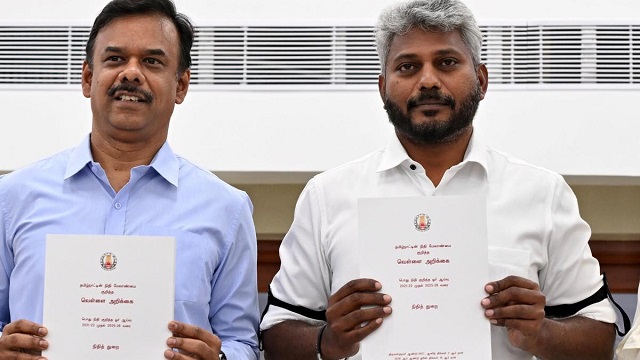
Recently, the TVK government released its first major policy document, the White Paper on Fiscal Management. In the document, the government criticised the previous DMK administration for presenting an overly optimistic Interim Budget.
TVK alleged that the earlier Budget had overestimated revenue and underestimated expenses. According to the government, this made the state’s financial situation appear better than it actually was. TVK argued that the real financial challenges became clear only after the new government examined the state’s accounts.
The White Paper was presented as an effort to provide a clearer picture of Tamil Nadu’s finances. The TVK government said it wanted to move away from unrealistic estimates and provide more accurate information about government income, spending and debt.
Based on these claims, the TVK government said its first full Budget would present a more realistic picture of the state’s financial condition. Finance Minister N. Marie Wilson presented the maiden Budget, with the government outlining its plans for revenue collection and public spending.
However, the Budget has now become a target of criticism from the DMK. The opposition has questioned whether TVK has followed the same approach that it previously criticised.
The DMK has alleged that some of the revenue estimates in the TVK Budget may be too optimistic. The opposition has also questioned whether the government has fully accounted for all future expenses and financial commitments.
The central issue in the debate is the difference between Budget estimates and actual results. Governments prepare budgets based on expected revenue and spending for the coming financial year. If actual revenue is lower than expected or expenses are higher, the government can face additional financial pressure.
TVK, however, has defended its approach and maintained that its Budget is based on its assessment of the state’s financial situation. The government is expected to argue that its estimates should be judged by actual performance over time rather than political criticism.
The controversy also highlights the importance of transparency in government finances. Revenue estimates, borrowing, welfare spending, salaries, infrastructure projects and other expenses all have a direct impact on the state’s financial health.
For ordinary people, the Budget matters because government finances can affect spending on education, healthcare, roads, welfare schemes and other public services. A large gap between expected and actual revenue could also affect the government’s ability to fund its promises.
The political debate between TVK and DMK is likely to continue as the financial year progresses. The real test for the TVK government will be whether its revenue targets are achieved and whether it can control spending while delivering the programmes announced in the Budget.
Ultimately, the claims made by both sides will need to be compared with official financial data and actual results. If TVK’s revenue estimates are achieved and expenses remain under control, the government can strengthen its argument that it has presented a realistic Budget. If there are large differences between estimates and actual figures, the opposition’s criticism is likely to become stronger.
For now, the dispute shows that Tamil Nadu’s finances have become an important political issue, with both the government and opposition debating how accurately the state’s economic situation is being presented.