
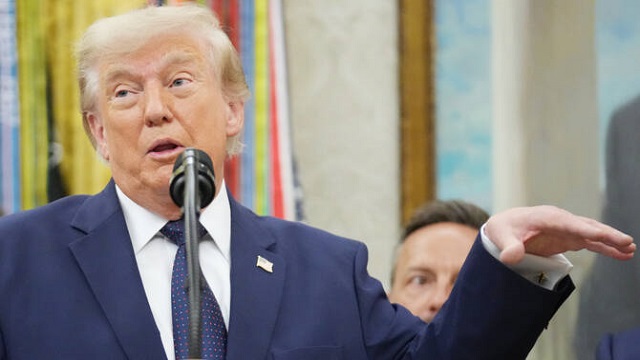
Donald Trump Threatens Iran with Harsh Response After Recent military clashes
Tensions between the United States and Iran have increased again after the two countries exchanged fire for the first time in several weeks. U.S. President Donald Trump has warned that the United States will respond strongly to any further attacks.
The latest clashes come after about six months of conflict between the two sides. Despite continued military and economic pressure, neither country appears ready to give in. The situation has reached a difficult deadlock, with both the U.S. and Iran maintaining their positions.
Strait of Hormuz Remains at the Center of the Crisis
One of the biggest issues in the conflict is the strategic Strait of Hormuz.
Iran continues to block the waterway, which is one of the world’s most important routes for the transportation of oil and other energy products. The United States, meanwhile, has maintained a counter-blockade around Iranian ports.
Any further disruption in the Strait of Hormuz could have a major effect on global energy supplies and prices. This is one reason why the international community is closely watching the situation.
U.S. Strikes Iranian Position
On August 30, the United States carried out strikes on Larak Island, located in the Strait of Hormuz.
The strikes targeted Iranian rocket launchers, according to reports. The attack marked a major escalation after several weeks without direct military action between the two countries.
Iran responded soon after with missile and drone attacks against targets in Jordan and the United Arab Emirates. The attacks were aimed at U.S. military positions in the region.
President Trump said that U.S. forces successfully intercepted the Iranian missiles, except for one missile that he described as not dangerous.
Iran Calls for Dialogue
Even as military tensions increased, Iran’s president called for talks with the United States.
Iranian officials have argued that continuing the conflict is not helping either country. They have indicated that dialogue could be a better way to address the dispute and reduce the risk of further destruction.
However, the latest exchange of attacks has increased fears that the conflict could return to a much larger level of fighting.
U.S. Plans More Economic Pressure
The United States is also continuing its economic campaign against Iran.
U.S. Treasury Secretary Scott Bessent said Washington plans to increase economic pressure on Tehran. The goal is to put further pressure on Iran’s economy and reduce its ability to finance military activities.
The measures could increase the financial difficulties already facing Iran and add more pressure on its government.
Growing Risk of a Larger Conflict
The latest exchange of fire has created fresh concerns across the Middle East.
Both countries continue to strengthen their positions, while there is still no clear agreement to end the conflict. The situation could become more dangerous if further attacks take place.
At the same time, Iran’s call for dialogue suggests that there may still be a possibility for diplomatic efforts.
For now, however, the situation remains highly uncertain. The United States continues to demand strong action against Iran, while Tehran insists that it will defend its interests.
With the Strait of Hormuz still at the center of the crisis and military forces positioned across the region, the next few weeks could be critical in determining whether the conflict moves toward negotiations or another major escalation.