
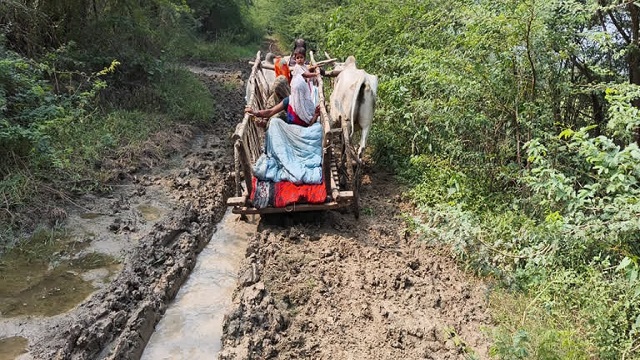
Pregnant woman carried on bullock cart as ambulance fails to reach Telangana hamlet
A pregnant woman from a remote village in Telangana had to be carried on a bullock cart to reach an ambulance after heavy rain made it difficult for emergency vehicles to enter the village.
The incident has highlighted the serious problems faced by people living in remote and tribal areas during the monsoon season. Poor road conditions, waterlogging and thick mud can make it difficult for ambulances and other emergency vehicles to reach villages on time.
Heavy Rain Blocks Village Roads
The woman needed medical care, but the roads leading to her village had become difficult to use because of continuous rain. The heavy rainfall turned the roads muddy and prevented the ambulance from reaching her location directly.
With no other easy way to travel, local residents used a bullock cart to carry the pregnant woman towards a point where the ambulance could reach her.
The unusual mode of transport shows the difficulties faced by people in villages where basic road infrastructure remains weak.
Emergency Healthcare Becomes Difficult
For pregnant women, elderly people and patients with serious health problems, quick access to medical care can be extremely important. Any delay in reaching a hospital can increase the risk during an emergency.
In remote areas, these problems can become worse during the monsoon. Roads that are already narrow or poorly maintained can become unusable after heavy rainfall.
Ambulances may also face difficulties when roads are covered with mud, water or damaged sections.
Challenges in Tribal and Remote Areas
The incident has once again raised concerns about healthcare access in distant and tribal parts of Telangana. Many villages are located far from major hospitals and healthcare centres.
Residents in such areas often depend on ambulances or other public transport to reach medical facilities. When roads are blocked, they may have to depend on local vehicles or traditional methods of transport.
Need for Better Infrastructure
The incident has also brought attention to the need for better roads and emergency healthcare facilities in remote villages.
Improved roads, better drainage systems and reliable ambulance access could help reduce delays during emergencies. Authorities may also need to prepare special plans for villages that regularly face problems during heavy rains.
Monsoon Challenges for Rural Communities
Every year, the monsoon brings serious challenges to several rural areas. Heavy rainfall can damage roads, isolate villages and disrupt transportation and essential services.
The experience of the pregnant woman has become another reminder that emergency healthcare should remain accessible even during difficult weather conditions.
For residents of remote villages, better infrastructure and faster emergency services can make a major difference during critical situations.