
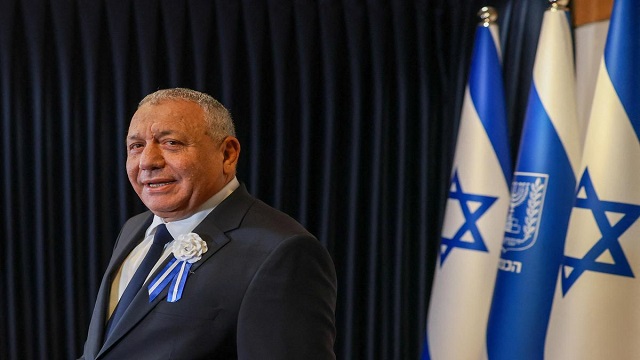
Eisenkot Calls for Respect for Israel’s Arab Minority
Israeli political leader Gadi Eisenkot has promised to protect the rights of Arab citizens in Israel after Prime Minister Benjamin Netanyahu and other right-wing leaders criticised the Arab community. The issue has become an important part of the country’s political debate, especially as Arab political parties could play a major role in forming the next government.
Recently, Netanyahu and several right-wing politicians have attempted to question the loyalty of Arab lawmakers by linking them to Hamas. These comments have created tension between political groups and raised concerns about the treatment of Arab citizens in Israel.
In the recent election, two Arab-majority political groups, Raam and the Joint List, secured a combined 19 seats in parliament. Their support could become important for Eisenkot as he tries to build a government. Their parliamentary strength gives them a significant role in discussions about the country’s future political leadership.
Eisenkot strongly defended the rights of Arab citizens and said they are an important part of Israel’s society and national identity. He criticised attempts to blame or isolate an entire community because of the statements or actions of particular political leaders. He also said such treatment goes against the basic principles on which Israel was established as both a Jewish and democratic state.
Netanyahu has repeatedly accused Arab political leaders of failing to clearly describe Hamas as a terrorist organisation following the group’s October 2023 attack on Israel. However, Arab political parties have condemned the attack, which also resulted in the deaths of Arab Israeli citizens. The issue has continued to create disagreements between Netanyahu’s supporters and Arab representatives.
The Israeli Prime Minister has also made allegations of election fraud involving Arab-majority parties. However, election authorities have dismissed these claims. Netanyahu has further accused some Arab political leaders of not accepting Israel as a Jewish state and of supporting the creation of a Palestinian or Islamic state.
Tensions also increased during the opening session of parliament when National Security Minister Itamar Ben Gvir reportedly insulted Joint List leader Youssef Jabareen. Ben Gvir accused him of being loyal to Hamas, adding to the political disagreements surrounding Arab representation.
Eisenkot has promised to stand against unfair treatment and ensure that Arab citizens receive equal rights and respect. However, forming a government may not be easy because some right-wing political leaders oppose including Arab parties in the ruling coalition. Former Defence Minister Avigdor Liberman is among those who have expressed opposition to such an arrangement.
President Isaac Herzog has asked Eisenkot to try to form a new government. He has 28 days to complete the task. If he cannot secure enough support within this period, he may receive additional time or return the mandate, allowing Netanyahu to get another opportunity to form a government.
The coming weeks will be important for Israel’s political future. The discussions are expected to focus on coalition support, the role of Arab political parties and the rights of minority communities. Eisenkot’s ability to bring different political groups together will play an important role in deciding whether he can form a stable government.