
India’s Foreign Secretary Meets US Delegation Over Russia Sanctions Concerns
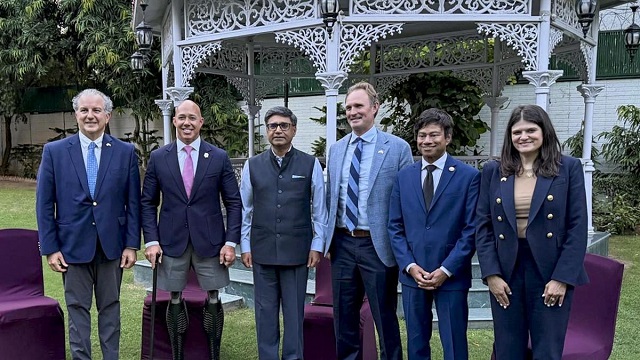
Foreign Secretary Vikram Misri met a bipartisan five-member U.S. Congressional delegation led by House Foreign Affairs Committee Chairman Brian Mast on September 27, 2026. The meeting came days after the United States enacted new legislation targeting Russia and countries that continue to purchase Russian energy.
The discussions focused on the future of India-U.S. relations and the recently enacted Lindsey O. Graham Sanctioning Russia and Iran Act of 2026, also known as the SRIA. India is closely examining the possible economic impact of the new legislation because it remains a major buyer of Russian crude oil.
The delegation was led by Republican Representative Brian Mast and included lawmakers with differing positions on the legislation. The meeting provided an opportunity to discuss India’s concerns directly with members of the U.S. Congress.
The new U.S. law gives the president the authority to impose targeted tariffs of up to 100% on imports from certain countries that purchase Russian-origin crude oil or natural gas, subject to conditions set out in the legislation. The measure also includes sanctions related to Russia’s energy sector and extends certain sanctions concerning Iran.
The legislation does not mean that a 100% tariff has automatically been imposed on India. Any such action would depend on a subsequent decision by the U.S. administration under the law. India has said it is studying the implications of the legislation for its trade and economic interests.
During the meeting, Misri and the U.S. lawmakers discussed a wide range of issues beyond the sanctions legislation. According to the Ministry of External Affairs, the talks covered energy security, counter-terrorism, freedom of navigation and other international issues of mutual interest.
The meeting comes as India and the United States continue to work on their broader bilateral relationship. The two countries have been discussing areas including trade, energy, strategic cooperation and critical technologies, while the Russia sanctions issue has added another area of discussion.
Mast has been closely involved in U.S. foreign policy and chairs the House Foreign Affairs Committee. His participation in the delegation made the meeting significant as India seeks to explain its position and understand the possible consequences of the new legislation.
India has continued to maintain that its energy decisions are guided by national requirements and market conditions. The possible impact of the U.S. law is therefore being examined in the wider context of India’s energy security, trade interests and relationship with Washington.
The Misri-Mast meeting is expected to form part of continuing discussions between India and the United States as both sides assess the implications of the new sanctions law. Further decisions by Washington could have consequences for trade and energy relations between the two countries.