
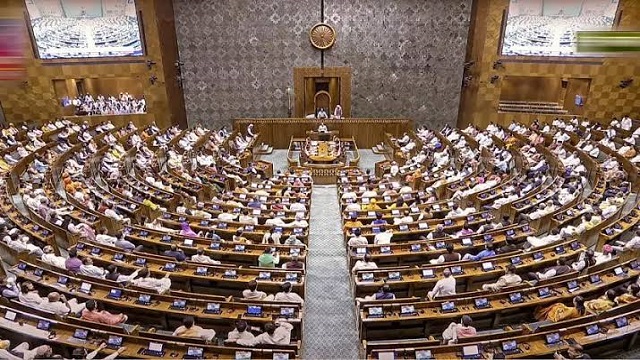
Lok Sabha Passes Supreme Court Judges Bill Without Debate Amid Protests
The Lok Sabha passed a bill to increase the number of judges in the Supreme Court from 34 to 38 without any discussion on August 3, 2026. This came despite ongoing protests by Opposition members over police action against student protesters at Jantar Mantar and allegations of theft at the Ram Temple in Ayodhya.
Two other bills—the Bankers’ Books Evidence Bill and the Indian Statistical Institute Bill—were introduced later in the day amidst chants and slogans from protesters. The House was repeatedly adjourned as Opposition members disrupted proceedings, forcing a suspension of activities until 2 p.m. before finally ending the session after passing the Supreme Court (Number of Judges) Amendment Bill.
At a meeting of the Business Advisory Committee, Congress leader Gaurav Gogoi, along with other Opposition members, demanded that Home Minister Amit Shah address the police crackdown on protesters and initiate discussions on the alleged mismanagement of funds at the Ram Temple. Prime Minister Modi was suggested to intervene in the matter.
The BAC allocated three hours each for discussing the Bankers’ Books Evidence Bill and the Indian Statistical Institute Bill, as well as five hours for another bill related to taxation laws. However, no time was set aside for amendments to the Foreign Contribution (Regulation) Act.
The Supreme Court Judges Bill replaces an ordinance passed earlier this year. The government argued that increasing the number of judges would help reduce the backlog of cases, which stood at 92,101 as of January 1, 2023. The bill also aims to allow the Chief Justice to form larger benches more regularly.
The Indian Statistical Institute Bill seeks to modernize the institution by making it a statutory body corporate under the President’s oversight. It aims to strengthen governance and research while expanding its role in fields like data science. The Bankers’ Books Evidence Bill updates colonial-era laws to recognize digital banking records as legal evidence in courts.
Both bills were passed without opposition after those who had objected did not push their concerns further.