
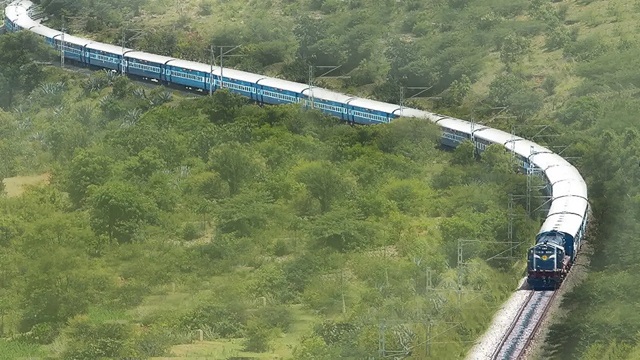
Sharp Railway Curves Force Speed Limits
Sharp curves on railway tracks are a major challenge for train operations, especially for both suburban and long-distance services. These curves force trains to slow down, acting like speed breakers on the railway network.
Because of safety concerns, railway authorities impose what are known as Permanent Speed Restrictions (PSR). These are fixed speed limits applied to specific sections of track where the curve is too sharp or the conditions are not suitable for high-speed travel. The main purpose of these restrictions is to reduce the risk of accidents and prevent derailments.
When a train travels through a sharp curve, it experiences more pressure and imbalance compared to straight tracks. If trains move too fast in such areas, there is a higher chance of instability, which can be dangerous for passengers and railway staff. To avoid this, speed is reduced in advance and maintained until the train clears the curved section.
However, these speed restrictions also affect the overall efficiency of train operations. Trains take more time to complete their journey, which can lead to delays in both passenger and freight services. In busy routes, even a small reduction in speed can affect the timing of multiple trains.
Railway engineers regularly study such curved sections to find ways to improve safety and performance. In some cases, tracks may be realigned or upgraded to reduce curvature. In other situations, better signaling systems and improved track maintenance are used to manage train movement more efficiently.
Despite these challenges, safety remains the top priority for Indian Railways. Permanent Speed Restrictions are considered necessary to ensure that passengers reach their destinations safely, even if it means slightly longer travel times.