
UN Loss and Damage Fund’s Payout to Nepal Explained
The United Nations climate fund has approved $21.6 million in financial support for Nepal to help the country recover from severe floods in August 2023. This is the first time the Fund for Responding to Loss and Damage (FRLD) has approved funding specifically for a country.
The financial support aims to help Nepal deal with the damage caused by extreme weather events linked to climate change. The decision is being seen as an important step in helping vulnerable countries recover from climate-related disasters. However, experts have raised concerns that the amount may not be enough to meet Nepal’s huge recovery needs.
What Is the Loss and Damage Fund?
The Fund for Responding to Loss and Damage was established at the United Nations climate conference, COP27, in 2022. Its main purpose is to support developing countries that face serious damage from climate change.
Many developing nations are highly vulnerable to floods, droughts, storms, rising sea levels and other climate-related events. These disasters can destroy homes, roads, farmland and public infrastructure, leaving governments with large recovery costs.
The fund is intended to help affected countries deal with these losses and support their recovery. By March 2026, 27 countries had pledged a total of $822 million to the fund. However, the fund had received requests for around $5.98 billion in financial support, showing that the demand for assistance is much higher than the money available.
Severe Floods Caused Major Damage in Nepal
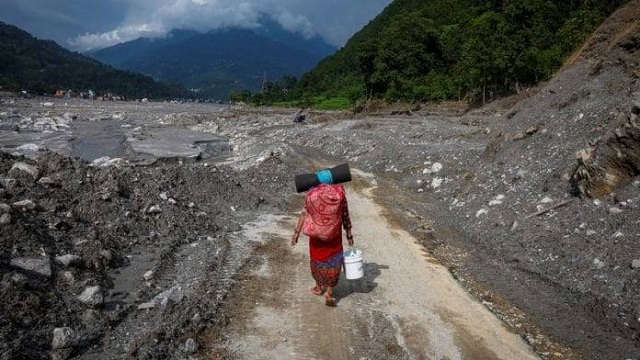
Nepal suffered serious damage from floods in August 2023. The disaster followed extreme natural events, including a massive avalanche linked to melting ice and unstable rock in mountainous areas. The resulting floods caused widespread destruction and created major challenges for local communities.
Climate change is increasing risks in mountain regions, where rising temperatures can speed up ice melting and affect the stability of snow, ice and rock. These changes can increase the danger of avalanches, landslides and sudden floods.
According to Nepal’s estimates, the country suffered economic losses of at least $2.69 billion. The government also estimated that around $4.71 billion would be needed for recovery and rebuilding.
The damage has created a major financial burden for Nepal, which needs support to repair infrastructure, restore essential services and help affected communities rebuild their lives.
How Much Money Has the Fund Approved?
The fund approved $21.6 million for Nepal during an extraordinary meeting in October 2026. The decision marks its first country-specific funding allocation.
Of the approved amount, $1.6 million was set aside for oversight fees and related costs. The remaining funding is intended to support recovery efforts following the floods.
The full amount was expected to receive further approval later in December 2026, according to the information provided. The funding is an important development, but it remains small compared with Nepal’s estimated losses and total recovery requirements.
Experts Welcome the Decision but Raise Concerns
Climate experts have expressed mixed views about the funding decision. Some have welcomed it as a landmark achievement because it shows that the loss and damage fund is beginning to provide direct financial support to countries affected by climate disasters.
For vulnerable nations, such funding can help pay for recovery work that may be difficult to finance using their own resources. It can also strengthen international efforts to address the effects of climate change.
However, other experts believe the amount approved for Nepal is not enough to meet the country’s needs. With estimated recovery costs of $4.71 billion, the $21.6 million allocation covers only a small part of the total requirement.
Critics have also stressed that financial assistance must arrive quickly after a disaster. Delays can make recovery more difficult for families who have lost their homes, farmers whose land has been damaged and communities whose roads and essential services have been destroyed.
Developed Countries Face Pressure to Provide More Support
The fund has also faced criticism over the slow pace of international contributions. Wealthier countries have been urged to provide more financial assistance because developing nations often have fewer resources to deal with major climate disasters.
The United States pledged $17.5 million to the fund under former President Joe Biden. However, the contribution was later withdrawn during President Donald Trump’s administration, according to the information provided.
Such developments have raised concerns about whether the fund will receive enough money to help countries facing increasingly serious climate-related losses.
Developing countries have argued that international support is important because they often face severe climate impacts despite having fewer financial resources to prepare for and recover from them.
Calls for Faster Emergency Funding
The loss and damage fund is hosted by the World Bank and operates through a multi-step process for reviewing and approving financial requests. While these procedures are intended to provide oversight and accountability, critics say they can slow the delivery of money to countries in urgent need.
They have called for a faster and more effective system that can provide emergency funding soon after major disasters occur.
A quicker process could help affected countries repair critical infrastructure, provide assistance to displaced families and restore essential services without long delays.
Experts believe the fund needs to balance proper financial checks with the urgent needs of disaster-hit communities. Clear procedures and faster decisions could help ensure that assistance reaches people when it is most needed.
A Major Step, but More Action Is Needed
The approval of $21.6 million for Nepal is an important milestone for the UN’s loss and damage fund. It demonstrates that the fund is moving towards providing financial assistance to countries affected by climate change.
However, Nepal’s experience also highlights the gap between the funding available and the actual cost of recovering from major climate disasters.
Experts say that more contributions from wealthy countries, faster approval procedures and stronger emergency support systems will be necessary for the fund to make a meaningful difference.
As climate-related disasters continue to threaten vulnerable communities, the challenge will be to ensure that financial assistance is not only promised but also delivered quickly enough to support recovery and protect people’s livelihoods.