
Morocco Tightens Border Security After Social Media Migration Calls
Morocco has increased security along its borders with Spain after messages on social media called for large groups of migrants to cross into the Spanish cities of Ceuta and Melilla.
The online calls have created concerns that another major migration attempt could happen soon. Authorities are especially worried about a possible gathering at the Ceuta border on August 15. However, officials have not confirmed who started the messages or whether the planned crossing is actually being organized.
Spain’s Civil Guard has confirmed that the border remains closed. Spanish Defense Minister Margarita Robles has also warned migrants against attempting another mass entry into Ceuta or Melilla. Spanish authorities are closely monitoring the situation and are working with Moroccan security forces to prevent a repeat of the earlier incident.
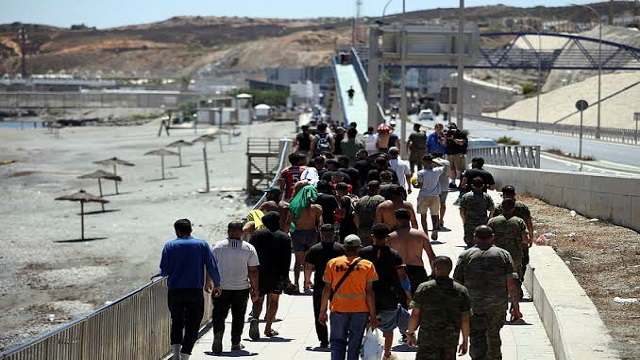
The latest concerns come after a major migration surge in late July. Around 72,000 migrants reportedly crossed into Ceuta after false information spread that the border had been opened. Many migrants were also motivated by difficult economic conditions and hopes of finding better opportunities in Europe.
Most of the migrants who entered Ceuta were later returned to Morocco. However, the incident created serious political and humanitarian concerns in Spain and other parts of Europe. At least 80 people reportedly died during the crossing attempt, while human rights organizations have said the actual number of deaths may have been higher.
Ceuta is one of two Spanish cities located in North Africa. The other is Melilla. Both cities share land borders with Morocco and are important entry points between Africa and the European Union.
Following the July incident, Morocco has increased the number of security personnel near both borders. The Moroccan Interior Ministry said that all necessary measures had been taken to stop further illegal crossings.
Security forces have increased patrols and monitoring around Ceuta and Melilla. Videos posted on social media reportedly show large numbers of police officers wearing riot-control equipment near the border. Water cannons, ambulances and other equipment have also been positioned in the area.
A senior Moroccan diplomat said that more than 20,000 security personnel are deployed every day along the Ceuta border. Maintaining such a large security operation is expensive and costs Morocco millions. The large deployment shows how seriously authorities are treating the possibility of another mass crossing.
Moroccan officials have also taken action against people suspected of encouraging illegal migration through social media. The Interior Ministry said that several individuals had been arrested in connection with online messages encouraging people to attempt crossings. Officials have not provided further details about the arrests.
Spanish authorities have also issued strong warnings. Defense Minister Margarita Robles said that Ceuta and Melilla are part of Spain and that any attempt to attack or force entry into these territories would be treated very seriously. She stressed that the events of July must not happen again.
Spain’s Civil Guard has shared warnings in French and Spanish to reach people who may be considering crossing the border. The messages explain that the border is still closed and that additional barriers have been built following the previous breach.
Authorities are also warning migrants not to believe false information on social media claiming that the border has been opened. Officials fear that such rumors could encourage thousands of people to travel to the border areas.
As August 15 approaches, Moroccan and Spanish authorities are expected to keep security forces on high alert. Both countries are closely watching social media activity and developments near Ceuta and Melilla.
The situation highlights the continuing migration pressure along Spain’s North African borders. Economic difficulties, misinformation and hopes of reaching Europe continue to influence migration attempts, while Spain and Morocco are increasing security to prevent dangerous mass crossings.