
Do Opinion Polls and Surveys Shape Public Support for Political Parties?
A recent nationwide opinion survey conducted by a major television news channel has created discussion about the possible political mood in the country. According to the survey, if a snap election were held, the BJP-led National Democratic Alliance (NDA) could regain support among voters.
The survey results were presented on television using colourful graphics, charts, and detailed discussions by news anchors. The confident presentation gave the findings a strong sense of importance and authority.
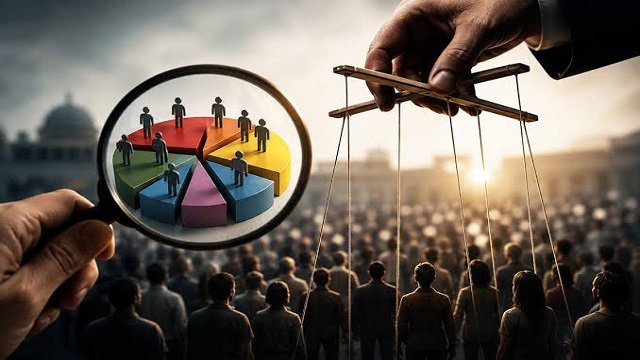
However, such surveys also raise an important question: Do opinion polls only measure public opinion, or can they also influence it?
What Do Opinion Polls Show?
Opinion polls are generally conducted to understand how people may vote if an election were held at a particular time. They ask selected groups of people about their political preferences and then use the responses to estimate the wider public mood.
However, a survey cannot always predict the final election result. Voters can change their opinions, political situations can develop quickly, and issues that are important today may not have the same impact when an actual election takes place.
The accuracy of a poll also depends on factors such as the number of people surveyed, how participants are selected, the questions asked, and how the collected information is analysed.
Can Media Coverage Influence Voters?
One of the biggest issues surrounding opinion polls is the way their results are presented by the media.
When a television channel repeatedly highlights that one political alliance is ahead, viewers may begin to see that party as stronger or more popular. Some voters may even feel that a particular party has a better chance of winning and change their own preferences.
This is sometimes described as a “bandwagon effect,” where people become more likely to support an option because they believe it is already popular.
At the same time, poll results can also have the opposite effect. If supporters believe their preferred party is losing, they may become more motivated to vote. Others may become less interested in voting.
Why Poll Methodology Matters
Experts and critics often stress the importance of looking beyond the headline numbers. A survey result should ideally be understood along with information about its sample size, methodology, margin of error, dates of the survey, and the areas covered.
Without this information, it can be difficult for the public to judge how reliable the findings are.
The way questions are asked can also affect responses. Even small differences in wording can sometimes influence how people answer.
Polls Are Not Election Results
An opinion poll should therefore not be treated as the final result of an election. It represents the views of the people who were surveyed at a particular point in time.
Political parties can also use such surveys to understand voter concerns and adjust their campaigns. At the same time, voters may use them as one source of information when thinking about political choices.
The recent survey claiming increased support for the BJP-led NDA has therefore attracted attention, but its findings should be considered carefully rather than viewed as a guaranteed prediction of an election outcome.
A Complex Relationship
Opinion polls have an important role in modern democracy because they can provide information about public sentiment. However, the way poll results are conducted, reported, discussed, and repeated can also affect how people understand the political situation.
This creates a complex relationship between measuring public opinion and shaping public opinion.
Ultimately, voters will make their decisions based on a wide range of factors, including government performance, local issues, economic conditions, political leadership, and their own personal experiences. Opinion polls can offer a snapshot of public mood, but only an actual election can determine the final result.