
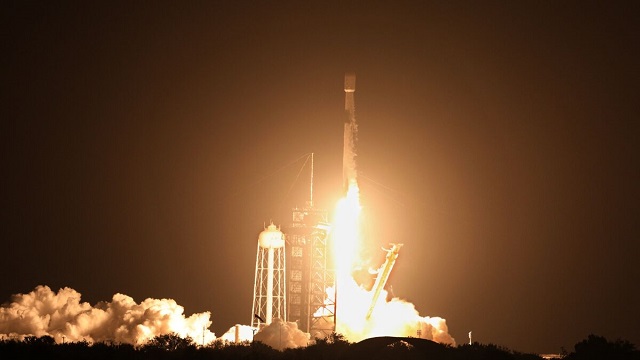
Falcon 9 Rocket Crash Provides Lunar Insights
A SpaceX Falcon 9 rocket stage recently crashed into the Moon during a space mission. Although the impact was not part of the original plan, scientists say it has provided a valuable opportunity to learn more about the Moon’s surface and its composition. The unexpected event has become useful for researchers studying the Moon and its geology.
The rocket struck the Moon near its equator, an area that has received less scientific attention than some other regions. The impact created a small crater on the lunar surface. Scientists are now studying images and other data collected after the crash to understand how the Moon’s soil and rocks reacted to the collision.
Researchers believe that studying the crater can provide important information about the Moon’s outer layer, including the type of material beneath the surface. By examining the debris and the shape of the crater, scientists hope to better understand the Moon’s structure and how it changes after an impact.
The information gathered from this event may also help improve future lunar missions. Scientists can use the findings to better predict how spacecraft or equipment will interact with the Moon’s surface during landings or other operations. This knowledge could make future missions safer and more successful.
Although the crash was unexpected, it has attracted the interest of the global scientific community. Experts say that even accidental events in space can provide valuable scientific data and help researchers improve their understanding of planets, moons, and other objects in the Solar System.
As more countries and private companies plan missions to the Moon, every new discovery becomes important. The lessons learned from this impact could support future exploration, help scientists study the Moon in greater detail, and contribute to the success of upcoming lunar missions.