
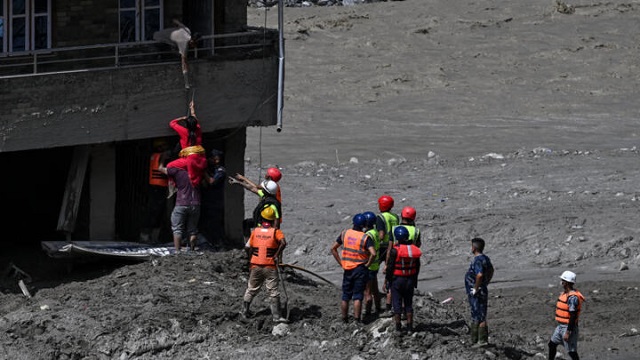
Nepal rescue teams struggle with shortages after floods
Kathmandu: Rescue teams in Nepal are facing serious difficulties as they continue operations following severe flash floods that caused widespread destruction in several parts of the country.
Rescue workers are reportedly dealing with shortages of important equipment, including body bags, ropes and helicopters. The lack of these resources is making it harder for teams to reach affected communities, search for missing people and recover bodies.
Flash Floods Cause Major Destruction
The flash floods are believed to have started on August 26 after ice and rocks collapsed near the Nepal-Tibet border.
The sudden event sent a large amount of water and debris into the Bhotekoshi River area. The powerful flow swept through nearby communities and caused heavy damage.
Homes, roads and bridges were damaged or destroyed. Hydropower projects in the region were also affected by the floodwaters and debris.
The destruction has left many communities struggling to access basic services and transportation.
Difficult Conditions for Rescue Workers
Rescue teams are working in extremely difficult conditions.
Floodwaters have changed the landscape in several areas, while large amounts of mud, rocks and debris have blocked roads and paths. This has made it difficult for rescue workers and emergency vehicles to reach remote locations.
The shortage of helicopters is another major challenge. Helicopters are especially important in mountainous parts of Nepal because many affected areas cannot be reached easily by road.
Without enough aircraft, rescue teams are finding it difficult to quickly reach people who may need urgent help.
Landslides Make the Situation Worse
The flash floods have also increased the risk of landslides.
Heavy debris and unstable ground have blocked roads and created additional dangers for rescue workers. In some places, rivers have also been blocked or changed their course because of the large amount of mud and rock carried by the floods.
These conditions are slowing down rescue and relief operations.
Shortage of Essential Equipment
Rescue workers also need basic equipment to safely carry out their operations.
Ropes are important for reaching difficult locations and moving people through dangerous areas. Body bags are needed for the safe recovery and transportation of victims.
The shortage of such supplies has added to the pressure on rescue teams already working under difficult conditions.
Remote Areas Face Greater Problems
People living in remote mountain areas are among those facing the greatest difficulties.
Some communities have been cut off because roads and bridges were damaged. With transportation routes blocked, it can take longer to deliver food, medicine and other essential supplies.
Rescue teams are trying to reach these areas as quickly as possible, but the difficult terrain and damaged infrastructure are slowing their efforts.
Need for More Support
The situation has highlighted the need for additional rescue equipment, transport and emergency supplies.
Authorities and rescue agencies are continuing their efforts to search for missing people, help survivors and assess the damage.
However, the combination of destroyed infrastructure, landslides, blocked rivers and shortages of equipment is making the operation extremely challenging.
As rescue efforts continue, providing more helicopters, emergency equipment and trained personnel could help teams reach isolated communities faster and improve the overall response to the disaster.
The floods have once again shown how vulnerable Nepal’s mountainous regions can be to sudden natural disasters and how important strong disaster-preparedness systems are for protecting people in remote areas.