
The Boundary Pillars of Chennai’s Chepauk
Last week, I had the opportunity to lead a special tour for a group of passionate cricket fans invited by the Chennai Super Kings. The tour focused on the rich cricketing history of Chepauk and its famous stadium.
It was an enjoyable experience, especially because some of the fans knew more cricket statistics than I did. However, my experience researching the history of the Madras Cricket Club helped me share several interesting stories about Chepauk’s past. I had earlier worked on the club’s 175th anniversary yearbook, published in 2021.
The Historic Pillars
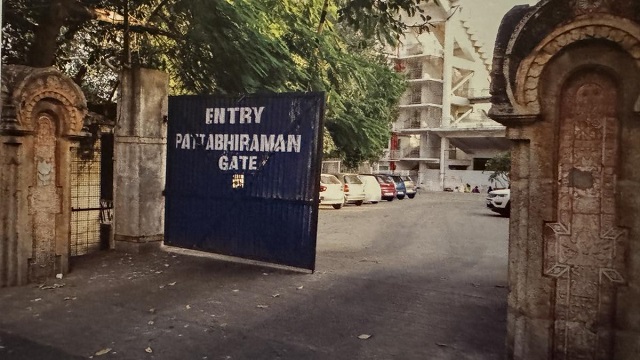
One of the first places we visited was the main entrance of the stadium. Two decorative pillars stand near the entrance, while another similar pillar can be found at the corner where the wall along Wallajah Road meets Bells Road.
These pillars are not ordinary structures. They are made mainly of granite and contain detailed decorative work using materials such as sandstone and porcelain.
The corner pillar is especially interesting because it has plaques showing the ten incarnations of Vishnu, known as the Dashavatara. These details provide an important connection to the area’s historical and architectural past.
However, the pillar does not have proper security around it. This leaves it open to possible damage or misuse and raises concerns about its long-term protection.
Pillars That Survived Many Changes
It is remarkable that these old pillars have survived despite the many construction and development projects that have taken place around Chepauk over the years.
The area has changed greatly, with roads, buildings and other infrastructure being added or modified. Yet these historic structures have continued to stand.
During one renovation project, actor and heritage enthusiast Mohan Raman noticed that the pillars could be damaged. He informed historian S. Muthiah and me about the situation.
We then wrote to N. Srinivasan, who was the president of the Tamil Nadu Cricket Association at the time. The matter was taken seriously, helping ensure that the historic pillars were protected during the work.
What Was Their Original Purpose?
There is still some uncertainty about exactly how many of these original pillars existed.
One of the earliest known references to them can be found in an 1896 guidebook. The book described how the British had taken over the Chepauk Palace and converted the property for government use.
The guidebook also mentioned an ornamental gateway decorated with images of Vishnu’s ten incarnations. According to the description, the designs were connected to the School of Arts, which is now known as the Government College of Fine Arts.
This suggests that the pillars were part of a larger gateway constructed after the British took control of the palace.
Possible Work of R.F. Chisholm
The design of the gateway and pillars is believed to be connected to R.F. Chisholm, an architect who played an important role in shaping the architecture of Madras during the British period.
Chisholm was known for combining European architectural ideas with traditional Indian designs. Several important buildings in the region were influenced by his work.
The decorative details on the Chepauk pillars reflect this mix of architectural traditions and make them valuable pieces of the city’s heritage.
How the Landscape Changed
The surroundings of Chepauk have changed significantly over the years. One major change came with the development of the Buckingham Canal.
The canal altered the landscape and eventually separated the stadium area from the Chepauk Palace complex. As the surroundings changed, the old gateway lost its original purpose.
The pillars, however, remained behind as reminders of what once stood there.
A Mystery From the Past
One question continues to remain unanswered: How many more pillars were originally part of the gateway, and where did they go?
Over the years, buildings and roads have been constructed and redesigned around the area. Some historical structures may have been removed, damaged or relocated during these changes.
The surviving pillars therefore become even more valuable because they offer a physical connection to Chepauk’s past.
Preserving Chepauk’s Heritage
Chepauk is widely known for its cricketing history, but its story goes far beyond the sport. The area has a deep architectural and cultural history that existed long before modern cricket became an important part of Chennai.
The old pillars are a reminder of this forgotten history. Their survival through decades of construction and redevelopment is remarkable.
As Chennai continues to grow, protecting such heritage structures becomes increasingly important. They may look like simple stone pillars to a passer-by, but they carry stories about the city’s architecture, colonial history and changing landscape.
For cricket fans, Chepauk is a legendary sporting venue. For historians and heritage lovers, it is also a place filled with stories waiting to be discovered. The surviving pillars stand quietly as witnesses to that long and fascinating history.