
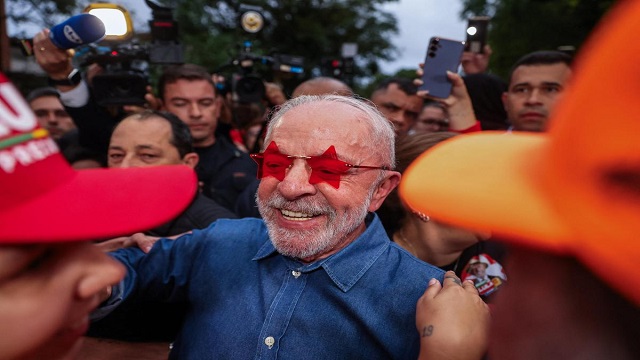
Brazil’s Lula Wins Election Against Bolsonaro
Left-wing President Luiz Inácio Lula da Silva has reportedly won Brazil’s presidential election held on October 25, defeating right-wing senator Flávio Bolsonaro. According to the figures provided, Lula received 51.75% of the votes, while Bolsonaro secured 48.25%. The result would give Lula another term in office and mark an important moment in Brazil’s political history.
The election campaign was closely contested, with both candidates seeking support from voters across the country. Lula focused on social welfare, economic stability and protecting the rights of low-income families. Bolsonaro, meanwhile, appealed to conservative voters and supporters of right-wing policies. The close result highlighted the deep political divisions within Brazilian society.
One of the main controversies during the election involved the extension of voting hours. A Supreme Court decision reportedly allowed voting to continue for an additional two hours after concerns emerged about transportation difficulties affecting some voters. The decision was intended to help eligible citizens reach polling stations and cast their ballots.
However, Bolsonaro’s campaign team criticised the extension and questioned whether the decision was fair to both candidates. The disagreement added to the political tension surrounding the election. Such disputes also highlighted the importance of clear election procedures and public confidence in the voting process. The circumstances surrounding the reported extension would need to be confirmed through official election records.
Lula’s campaign faced several challenges after he reportedly finished behind Bolsonaro in the first round. His supporters increased their efforts to reach voters through public rallies, campaign events and social media. The campaign focused on issues that had attracted public attention during Bolsonaro’s previous time in office, including his government’s response to the COVID-19 pandemic and its environmental policies.
Lula also highlighted the importance of protecting Brazil’s national interests in international relations. During the campaign, he stressed the need for Brazil to make independent decisions and avoid becoming too dependent on foreign governments. His criticism of Bolsonaro’s approach to the United States formed part of a wider debate about Brazil’s role in global affairs.
Social welfare remained one of Lula’s main campaign priorities. His earlier governments introduced programmes designed to reduce poverty and provide financial assistance to low-income families. He has also supported measures to improve access to education, healthcare and employment opportunities. If the reported victory is confirmed, these issues are expected to remain important parts of his administration’s agenda.
Economic stability will also be a major challenge. Brazil must manage inflation, encourage investment, create jobs and maintain public confidence in its economy. At the same time, the government will need to balance spending on social programmes with the country’s wider financial needs.
Another important challenge will be working with Congress. A divided political system can make it difficult for a president to pass legislation, especially when opposition parties hold significant influence. Lula will need to negotiate with lawmakers from different political groups to move his policies forward. His ability to build support in Congress will play an important role in determining how effectively his government can implement its plans.
Environmental protection is also likely to remain a key issue. Brazil is home to much of the Amazon rainforest, which plays an important role in the global climate and supports a wide variety of wildlife. Lula has previously promised stronger action against illegal deforestation while supporting sustainable economic development. Balancing environmental protection with agriculture, industry and local employment will remain an important task.
Lula’s age and experience have also attracted public attention. Born in October 1945, he would turn 85 in October 2030, near the end of a hypothetical presidential term beginning in 2027. His leadership, health and ability to manage the demands of the office would therefore remain subjects of public interest, although his future political plans should not be assumed without confirmation.
The reported election result would give Lula another opportunity to pursue his economic and social goals. However, a narrow victory would also mean that a large section of the electorate supported his opponent. Addressing the concerns of voters across the political spectrum will be important for maintaining public confidence.
Brazil now faces important questions about its economic future, political stability and international relationships. If the reported results are officially confirmed, Lula’s next term will be shaped by his ability to deliver on campaign promises while working with a divided Congress and a politically divided public.