
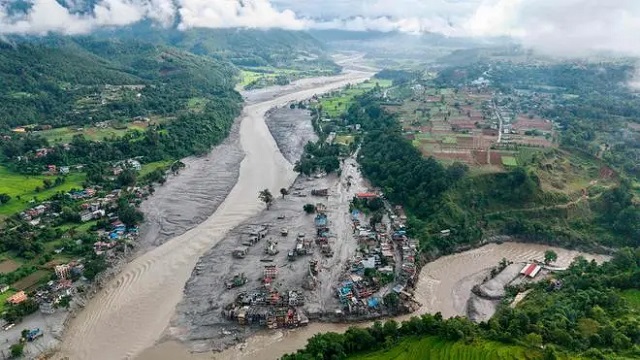
Nepal Flash Floods: No Warning in the Himalayas
Kathmandu: A major flash flood in the Himalayan region has caused widespread destruction across parts of Nepal and Tibet. The disaster began on the morning of August 26, when a large section of ice and rock broke away from the Langtang Himal mountain in a narrow valley between Tibet and Nepal’s Rasuwa district.
The falling ice and rock entered the small Lende Khola River, temporarily blocking the flow of water. When the blockage broke, a huge amount of water, ice and debris rushed through the valley.
The powerful flood travelled for around 60 kilometres, destroying buildings, roads, bridges and important infrastructure along the way.
Border Area Hit by Huge Flood
One of the worst-affected areas was the Rasuwagadhi border post, an important crossing between Nepal and China. The flood caused major damage to the border facility and nearby infrastructure.
The trading town of Timure was also badly affected. The town is an important commercial area near the border and was hit by the sudden flow of water and debris.
The flood also reached Syabrubesi, an important gateway for trekkers travelling into the Himalayan region.
Several other areas, including Nuwakot, Dhading and Chitwan, were also affected.
Trishuli River Overflows
The disaster became even more serious when the Trishuli River overflowed in Chitwan.
Large amounts of water moved from the mountain areas toward the plains, causing flooding and destruction in lower-lying regions.
People living near the river were forced to deal with rapidly rising water levels and damaged roads and bridges.
Water Levels Rose Within Minutes
The speed of the flooding made the situation especially dangerous.
In some places, water levels reportedly increased by as much as 9 metres within only 30 minutes.
Such a sudden rise gave people very little time to escape. Many residents and workers were caught by surprise as the flood moved through the valley.
The large amount of mud, rocks and ice carried by the water also made rescue operations extremely difficult.
Hundreds Dead and Thousands Missing
More than 900 people have reportedly been confirmed dead across Nepal and Tibet, while nearly 2,500 people remain missing.
The victims include people from different backgrounds and countries.
Among those affected are pilgrims travelling toward Mount Kailash, trekkers visiting the Himalayan region and workers employed at hydropower projects.
Some hydropower workers are believed to have been trapped inside tunnels or at project sites when the flood hit.
Foreign Nationals Also Affected
The disaster has affected people from more than a dozen countries.
Citizens of countries including India, the United States, the United Kingdom and Malaysia are among those reported dead or missing.
Authorities and rescue teams are working to identify victims and locate people who may still be trapped or missing.
Rescue Operations Face Major Challenges
Rescue teams are facing difficult conditions because many roads and bridges have been destroyed.
Landslides, damaged infrastructure and large amounts of mud and debris are making it difficult to reach some areas.
Mountainous terrain is also slowing down rescue operations. Emergency teams are trying to reach isolated communities and search for missing people while providing food, medicine and other essential supplies.
One of the Worst Himalayan Disasters
The scale of the flooding has made it one of the most serious natural disasters to hit the Himalayan region in recent history.
The disaster has highlighted the risks faced by communities living near mountain rivers and glaciers. Sudden collapses of ice and rock can create enormous amounts of water and debris in a very short period.
As rescue and recovery operations continue, authorities are working to assess the full extent of the damage and determine the fate of thousands of missing people.
For families across Nepal, Tibet and other countries, the search for missing relatives remains the biggest concern. The coming days will be critical as rescue teams continue their difficult work in the affected Himalayan areas.