
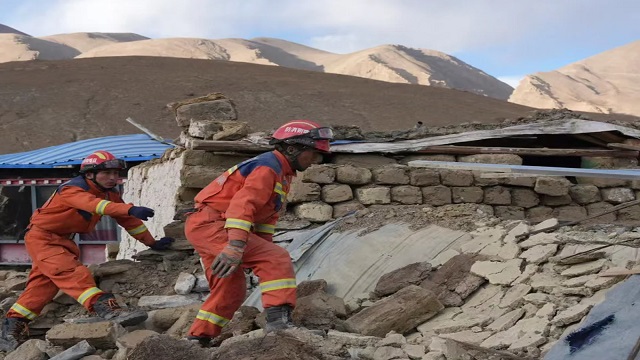
Tibet Earthquake Kills 16, Injures Over 40; Rescue Efforts Ongoing
A powerful magnitude 7.0 earthquake struck Baqen County in Tibet last evening, causing deaths, injuries and serious damage to buildings. The disaster killed 16 people and left more than 40 others injured. The strong tremors also damaged homes and triggered rockfalls in several areas, creating dangerous conditions for residents.
Rescue teams have been sent to the affected areas to search for survivors, provide medical assistance and help people who have lost their homes. More than 1,600 rescue workers are involved in the emergency operations. Authorities are working to reach affected communities and provide essential supplies to those in need.
The earthquake has created major challenges for local residents and emergency services. Communication services have been disrupted in parts of the region, making it difficult to share information and coordinate rescue efforts. Train services have also been temporarily suspended as a safety precaution while officials assess the damage.
Hundreds of Homes Damaged or Destroyed
According to the Nagqu media office, at least 339 homes and 20 livestock sheds were destroyed by the earthquake. Many families have been left without safe places to stay, and some residents may need temporary shelters while authorities assess the condition of damaged buildings.
Among the injured people, 11 are reported to be in serious condition. Medical teams are providing treatment to those affected, while rescue workers continue to search damaged areas and assist people who need urgent help.
The earthquake has also affected livestock facilities, which are important to many local families. Damage to these structures could create additional difficulties for people whose livelihoods depend on raising animals.
Rescue Operations Continue Amid Difficult Conditions
Rescue teams are working to reach affected communities and provide emergency assistance. However, damaged buildings, rockfalls and communication problems are making some operations more difficult.
Authorities are also preparing for challenging weather conditions. Intermittent snowfall is expected over the next three days, which could make rescue work more difficult and increase the hardship faced by people staying outdoors or in temporary shelters.
Cold weather can create additional risks for displaced residents, particularly children, older people and those who have been injured. Rescue workers will need to provide suitable shelter, warm clothing, food, drinking water and medical care.
Earthquake Details and Location
According to India’s National Centre for Seismology, the earthquake struck the Nagqu area at 8:03 pm Indian Standard Time. Its magnitude was recorded as 7.0, and the reported depth was approximately 173 kilometres below the Earth’s surface.
The epicentre was around 400 kilometres from Lhasa, the capital of Tibet. The strong earthquake caused tremors that damaged buildings and triggered rockfalls in the affected region.
Earthquakes can cause serious damage depending on their magnitude, depth, distance from populated areas and the strength of local buildings. Even after the main earthquake, aftershocks can pose further risks to damaged structures and people involved in rescue operations.
Authorities Focus on Relief and Recovery
Local authorities and emergency teams are continuing their efforts to help affected residents. Their immediate priorities include rescuing survivors, treating injured people, checking damaged buildings and providing temporary accommodation.
The coming days will be important as officials assess the full extent of the damage and respond to the needs of displaced families. The expected snowfall may further complicate relief operations, making emergency supplies and safe shelter especially important.
The earthquake has caused significant damage in the affected parts of Tibet, leaving families facing loss and uncertainty. Rescue teams are continuing their work to support survivors and help communities recover from the disaster.