
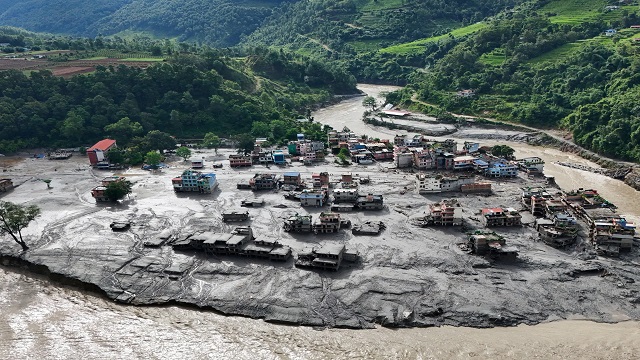
Tragedy in Nepal’s Himalayas
When reports of the disaster in Nepal began emerging on August 26, the scale of the tragedy was difficult to understand. News reports from places such as Rasuwa, Timure, Syabrubesi, Bhotekoshi, and Trishuli described a disaster that had caused enormous destruction across the Himalayan region.
The names of these places may sound remote to many people, but the images from the affected areas showed the seriousness of the situation. Powerful floodwaters swept through communities, damaging roads, bridges, homes, and other infrastructure.
Powerful Floodwaters Cause Widespread Destruction
The floodwater was not just ordinary water. It carried wood, rocks, pieces of metal, and what appeared to be parts of destroyed buildings. The fast-moving water became extremely dangerous for anyone caught in its path.
Pictures from the affected areas showed muddy brown water rushing through valleys and along river channels. Large amounts of debris were carried downstream, making rescue operations even more difficult.
In some areas, roads were completely washed away. Bridges were also badly damaged, leaving only small sections standing above the powerful water.
Hundreds of Lives Lost
The disaster has resulted in a huge loss of life. Reports indicated that more than 600 people had died, while nearly 2,400 people were reported missing.
For families in the affected communities, the disaster has brought fear and uncertainty. Many people are still waiting for information about relatives and friends who have not been found.
The large number of missing people has also made it difficult to understand the full impact of the disaster.
Difficult Rescue Operations
Rescue teams are facing major challenges while searching for survivors. Floodwaters have damaged roads and bridges, making it difficult to reach some areas.
The presence of rocks, mud, broken structures, and other debris has made the search even harder. Rescue workers must also remain careful because water levels can change quickly in mountainous areas.
Despite these difficulties, emergency teams continue to search for missing people and provide assistance to those who survived.
Images Show the Human Cost
The photographs from the disaster provide a powerful picture of the damage. Roads that once connected villages have disappeared, while bridges have been damaged or destroyed.
The images of fast-moving water filled with debris show how quickly the disaster changed people’s lives. Homes, vehicles, roads, and other property were swept away or badly damaged.
For those who witnessed the floods, the experience is likely to remain with them for a long time.
A Tragedy That Will Not Be Forgotten
The disaster in Nepal is a reminder of how powerful and unpredictable natural events can be, especially in mountainous regions.
As rescue and recovery efforts continue, the immediate focus remains on finding missing people, helping survivors, recovering victims, and providing support to affected families.
The scale of the destruction is difficult to describe with numbers alone. The images of destroyed roads, broken bridges, and powerful floodwaters show the true impact of a disaster that has left many communities facing loss, fear, and uncertainty.