
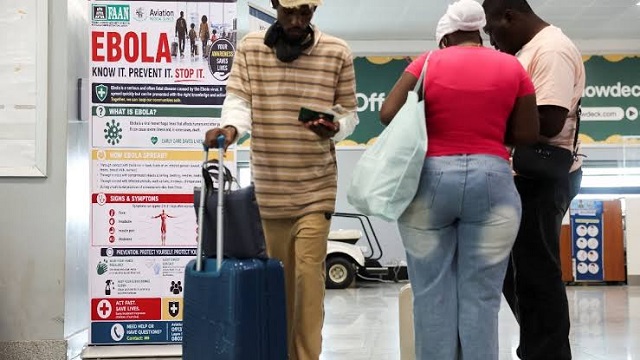
U.S. Mandates Ebola Travel Disclosures for Air Passengers
The United States is introducing new travel rules for passengers arriving by air to help prevent the spread of Ebola. Under the reported measures, travellers will need to inform airline staff if they have visited the Democratic Republic of the Congo (DRC) during the previous 21 days. The main aim is to identify people who may have been exposed to the virus and reduce the risk of it spreading in the United States.
Ebola is a serious infectious disease that can cause severe illness and may lead to death. It spreads mainly through direct contact with the blood or other body fluids of an infected person, as well as contaminated objects. Health officials closely monitor Ebola outbreaks because early detection and proper medical care are important for protecting public health.
The Democratic Republic of the Congo has experienced Ebola outbreaks in the past. During an outbreak, health authorities work to identify infected people, monitor those who may have been exposed and prevent further transmission. Travel screening is one of the measures used to identify possible health risks among international passengers.
New Rules for International Travellers
Under the reported measures, passengers may be asked to complete a declaration form or provide information about their recent travel history. Airline staff and health officials can use this information to identify travellers who may need additional screening or health checks.
Travellers are expected to provide accurate information about the countries they have visited. People who have recently travelled to an affected area may face additional checks or travel restrictions, depending on the rules in force. Passengers who show symptoms of Ebola may also require medical assessment and further public health measures.
Why Is the U.S. Taking This Step?
The U.S. government aims to reduce the possibility of Ebola entering the country and spreading within communities. Identifying people who may have been exposed to the virus can help health authorities respond quickly and take suitable precautions.
Other countries have also introduced health screening measures during disease outbreaks to protect their populations. International cooperation is important because people travel across borders every day, making it necessary for governments to share information and respond to health emergencies.
Health experts stress that travellers should provide honest information about their travel history and follow official health guidance. Early identification, medical monitoring and appropriate infection-control measures can help reduce the risk of further transmission.
The new measures are part of broader efforts to protect public health and limit the spread of Ebola. Travellers should check the latest official U.S. travel requirements before departure, as rules may change depending on the outbreak situation.