
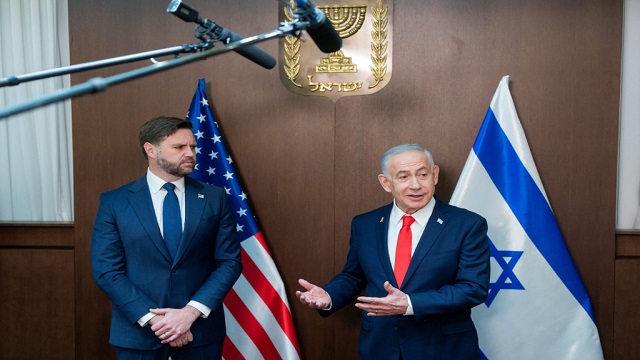
U.S. Vice President Vance Refuses to Endorse Netanyahu’s Re-election
U.S. Vice President JD Vance declined to endorse Israeli Prime Minister Benjamin Netanyahu for re-election on October 19, 2026. His decision came just one day after U.S. President Donald Trump publicly backed Netanyahu. Vance said he was focused on supporting American political candidates and preparing for the upcoming U.S. midterm elections.
During an interview with journalist Mark Halperin, Vance praised Trump’s influence in politics. He said, “The President has the most influential endorsement in American or international political history.” However, he did not offer his own endorsement of Netanyahu, explaining that his attention was on domestic political campaigns.
At the time, Vance was travelling to North Carolina to campaign for Republican Senate nominee Michael Whatley. His visit was part of the Republican Party’s efforts to gain support ahead of the midterm elections, which will play an important role in shaping the balance of power in Congress.
Vance’s decision has attracted attention because he previously supported a foreign political leader, Hungarian Prime Minister Viktor Orban. Vance had endorsed Orban before his party lost Hungary’s parliamentary election last spring. His different approach towards Netanyahu has raised questions about his position on foreign political endorsements.
The issue comes at a sensitive time for U.S.-Israel relations and the political debate surrounding Jewish Americans. Concerns about antisemitism have become part of the campaign discussion ahead of the midterm elections. Republican officials have criticised some Democratic candidates over their positions on Israel and Jewish communities, while those debates have become increasingly important in several election campaigns.
Vance has also faced questions from some Jewish Republican supporters about his commitment to Jewish Americans and the U.S.-Israel relationship. Last month, he spoke privately at a Republican Jewish Coalition event in Las Vegas. The speech reportedly left a positive impression on some attendees, although questions remained about his relationship with conservative podcast host Tucker Carlson, who has faced criticism over alleged links to antisemitic views.
At the same time, Vance has criticised aspects of the Israeli government’s approach to the conflict with Iran. He has accused some Israeli officials of trying to influence American public opinion in ways that could prolong the war. His comments have highlighted differences that can arise between U.S. domestic political interests and the country’s relationship with Israel.
Vance’s decision not to endorse Netanyahu does not necessarily indicate a complete change in U.S. policy towards Israel. However, it has drawn attention to the political considerations facing Republican leaders as they balance international relationships, domestic concerns and the upcoming elections.
As the midterm campaigns continue, Vance’s comments may remain part of the wider discussion about the Republican Party’s approach to Israel, antisemitism and American foreign policy.