
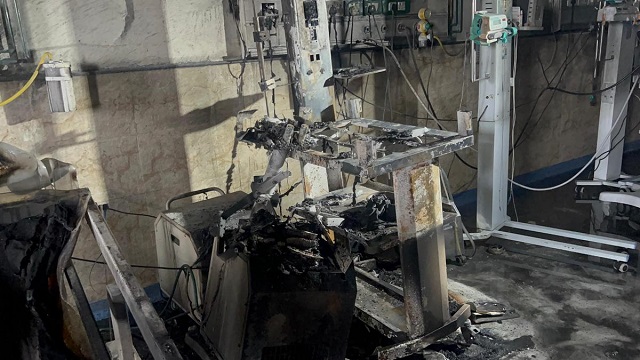
Hospital Fire Kills Three Infants
Three newborn babies died after a fire broke out in the Special Newborn Care Unit (SNCU) of Rajiv Gandhi Institute of Medical Sciences (RIMS) in Adilabad, Telangana, late on September 21.
The fire broke out in the newborn care unit while several babies were receiving treatment in incubators. Preliminary information from officials indicated that an electrical short circuit in an air-conditioning unit may have triggered the fire. The exact cause is still being investigated.
The unit quickly filled with thick smoke, creating a dangerous situation for the newborns. Hospital staff, relatives and emergency personnel immediately began moving the babies out of the affected ward. Some rescuers reportedly had to break glass panes to reach the smoke-filled area.
Officials said 27 newborns were evacuated and shifted to other hospitals or nearby facilities for treatment. Several babies were affected by smoke inhalation, while the condition of most of the rescued infants was reported to be stable.
Three babies later died. Reports said the infants were extremely premature and suffered serious effects from smoke or toxic fumes following the fire. Two of the deaths occurred after the babies were taken for further treatment.
The incident has raised concerns about electrical equipment and fire-safety arrangements at the hospital. Officials said the air-conditioning unit involved in the incident had reportedly undergone repair about a week earlier. However, the investigation will determine whether equipment failure, maintenance issues or other factors contributed to the tragedy.
Telangana Chief Minister A. Revanth Reddy ordered an inquiry into the incident. Health Minister C. Damodar Rajanarasimha also visited RIMS and announced that an expert committee would conduct a comprehensive investigation into the cause of the fire and any possible safety or administrative lapses.
Authorities have also ordered three separate safety audits at RIMS. These will examine the hospital’s electrical systems, fire-safety arrangements and civil or structural safety. The findings are expected to help identify any problems and recommend measures to prevent similar incidents in the future.
The tragedy has highlighted the importance of strong fire-safety and emergency systems in newborn care units, where premature and critically ill babies require continuous medical support. The expert inquiry and safety audits will determine the exact cause of the incident and whether any lapses contributed to the deaths.