
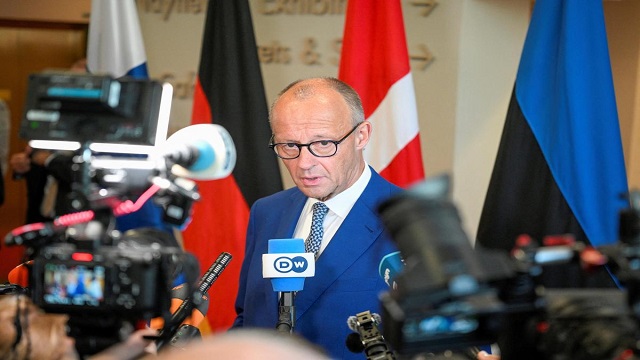
Merz Wins Municipal Polls but Faces Challenges Ahead
German Chancellor Friedrich Merz has received some political relief after his conservative Christian Democratic Union (CDU) performed strongly in municipal elections in Lower Saxony. Preliminary results showed the CDU finishing first, although the far-right Alternative for Germany (AfD) also made significant gains.
The CDU received 27.2% of the vote, while its coalition partner, the Social Democratic Party (SPD), secured 24.6%. The AfD finished third with 15.9%, marking a major improvement compared with its result in the 2021 municipal elections.
The results come at an important time for Merz, whose government has faced increasing political pressure. The CDU recently suffered a major defeat in state elections in eastern Germany, raising questions about the chancellor’s leadership and his plans to introduce economic and political reforms.
Lower Saxony is an important industrial state and is home to major companies such as Volkswagen and Salzgitter. CDU state leader Sebastian Lechner acknowledged that voters want changes, particularly over rising energy and housing costs.
The CDU also achieved an important victory in the mayoral election in Wolfsburg. However, it failed to win the mayoral race in Salzgitter, where the AfD reached the runoff stage. The result demonstrates the growing strength of the far-right party in some parts of Germany.
Merz now faces further challenges as important state elections approach in Mecklenburg-Western Pomerania and Berlin. Left-wing parties are expected to perform strongly in these contests, adding to the pressure on the chancellor and his coalition government.
Growing Pressure on Merz
Merz’s approval ratings have fallen to record-low levels as Germans continue to face concerns about the cost of living, pensions and economic uncertainty. A recent poll reportedly found that 78% of Germans believe Merz should not continue as chancellor.
The poll also showed divisions within his own party. Around 58% of CDU supporters said they wanted Merz to be replaced, while 36% continued to support him.
Another major challenge is the CDU’s policy of maintaining a political “firewall” against the AfD. The strategy is designed to prevent cooperation between mainstream parties and the far-right group.
Critics now argue that the strategy is becoming less effective as the AfD continues to gain support. Some members of the CDU have also questioned whether Merz’s current approach can help the party win future elections.
CDU youth leader Clara von Nathusius has reportedly criticized the firewall policy and raised concerns about Merz’s leadership. She warned that the party could struggle in future elections if it continues with its current strategy.
Economic Concerns Add to Political Pressure
Germany is also dealing with wider economic challenges. Rising energy and living costs are affecting households, while uncertainty in the global economy is creating additional pressure on businesses.
Higher oil prices and conflicts in West Asia could make the situation more difficult by increasing energy costs and putting further pressure on the German economy.
Although the Lower Saxony results provide some relief for Merz, the growing support for the AfD and continued concerns about the economy show that the chancellor still faces a difficult political road ahead.
The upcoming state elections will be closely watched as a test of Merz’s leadership and the CDU’s ability to regain public confidence.