MGM Healthcare Performs Chennai’s First Spinal Cord Stimulation, Helps Restore Hand Movement in Road Accident Survivor
MGM Healthcare, Chennai, has performed the city’s first spinal cord stimulation electrode implantation, an advanced treatment in which small electrodes are placed near the spinal cord to deliver controlled electrical impulses that modulate nerve activity and support the recovery of movement and function.
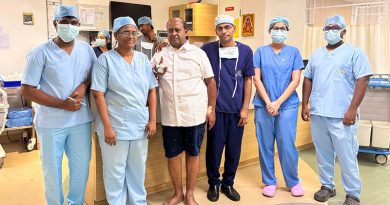
The procedure was performed on a 30-year-old auto driver from Vellore who had lost movement in both legs and had severely limited movement in his hands below the elbows following a major spinal cord injury sustained in a road traffic accident a year ago. Following the procedure, the patient has shown gradual improvement in hand muscle strength. Currently the patient has shown excellent improvement in Distal Hand Power by MAR 1 Grade over 6 months.
The patient will require frequent programming of the spinal cord stimulation electrodes as his neurological function improves. His recovery is expected to continue over the next one to one-and-a-half years, with regular follow-up and rehabilitation playing an important role in maximising functional recovery.
When the patient was admitted in the hospital, doctors did an MRI scan of the cervical spine (C-spine) to assess the extent of the spinal cord damage following the accident. Clinical examination, together with the imaging findings, confirmed that he had an ASIA Grade B spinal cord injury, indicating a severe injury in which sensation is preserved below the level of injury, but normal motor function is largely absent.
Following the diagnosis, the medical team opted for spinal cord stimulation to support neurological recovery. A 16-contact spinal cord stimulation electrode system was implanted, with the electrodes carefully positioned over the dura, the protective outer covering of the spinal cord, at the C5 level of the cervical spine.
The placement was planned to target the region of the spinal cord associated with the patient’s impaired motor function. The electrodes deliver controlled electrical impulses to modulate spinal cord activity, with the stimulation settings adjusted periodically based on the patient’s clinical examination and progress.
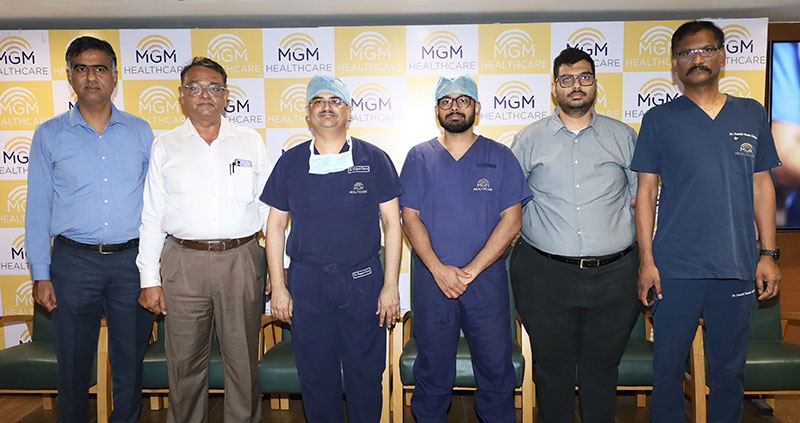
The procedure was performed by the neurosurgical team comprising Dr. Roopesh Kumar, Director of Neurosurgery and Dr. Ajinkya Rewatkar, Consultant Neurosurgeon who led the electrode implantation and spinal cord stimulation treatment.
In his comments, Dr. Roopesh Kumar, said, “Spinal cord stimulation offers a new ray of hope for patients with spinal cord injuries who continue to struggle with weakness, severe pain or spasticity, particularly when there is little or delayed motor recovery despite conventional treatment and rehabilitation. In this patient, the treatment has already translated into measurable improvement in hand movement, which is encouraging. We conducted a detailed assessment before the procedure and prepared him for the rehabilitation required after implantation. Stimulation is not a standalone treatment. It works best when combined with structured physiotherapy and rehabilitation. With regular programming of the electrodes based on clinical improvement, we hope to maximise his neurological recovery over the coming months. This technology can be a boon for carefully selected patients, offering an opportunity to regain function that may otherwise remain severely impaired.”