
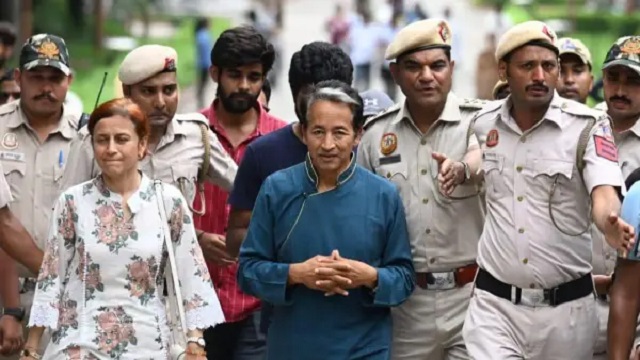
Sonam Wangchuk Calls for People’s Tribunal Over 2025 Ladakh Police Action
Ladakhi activist Sonam Wangchuk has called for a people’s tribunal to examine the September 24, 2025 violence in Leh, in which four civilians were killed during protests. The incident followed demonstrations over demands for greater political safeguards, statehood and protection of Ladakh’s land and employment interests.
The Central government had already ordered a judicial inquiry into the incident. The inquiry is being headed by retired Supreme Court judge Justice B.S. Chauhan and is examining the circumstances that led to the violence, the police action and the deaths.
The inquiry has been continuing through 2026. According to the Ladakh administration, the commission had examined administrative witnesses and received affidavits from members of the public. The administration said in March that the commission would next examine civilian witnesses as part of the ongoing proceedings.
Wangchuk has continued to demand greater scrutiny of the police action. He has alleged that automatic weapons were used without proper authorisation. Such allegations remain part of the wider debate surrounding the incident and are among the issues that would need to be established through an inquiry or other legal process.
The activist is also seeking what he considers adequate compensation for the families affected by the violence. He has criticised the compensation announced for the victims and compared it with arrangements made in other cases, including an agreement in Delhi. These are Wangchuk’s criticisms of the government’s response.
Wangchuk has announced a symbolic 20-kilometre march in Leh on September 23, ahead of the first anniversary of the September 24 violence. He has said September 24 will be observed as a day to remember those who died during the protests. The original plan for a longer march from Kargil was shortened because of weather conditions.
At the same time, discussions between Ladakhi representatives and the Ministry of Home Affairs (MHA) are continuing. Wangchuk is part of the group negotiating with the Centre on constitutional safeguards and a new governance framework for Ladakh. Recent talks have included discussions about a possible constitutional provision under Article 371(K) and a new elected governance body for the Union Territory.
Ladakhi groups have been seeking protections for local land and employment, greater political representation and safeguards for the region’s cultural and environmental interests. They have also raised issues concerning cases registered against people following the September 2025 violence.
The government has said it remains committed to dialogue with Ladakh’s stakeholders. In March 2026, the MHA also revoked Wangchuk’s detention under the National Security Act, saying the government wanted to create an environment for peace, stability and constructive dialogue.
The debate over the September 2025 violence therefore continues alongside negotiations over Ladakh’s future governance and constitutional protections. Wangchuk and other local representatives are pressing for greater accountability and safeguards, while the government’s judicial inquiry and talks with Ladakhi groups remain ongoing.