
Wide-Ball Controversy in India vs Japan T20I Explained
In a recent one-off T20I between India and Japan, the match saw a dramatic end due to a controversial wide-ball decision. Indian spinners Axar Patel and Washington Sundar performed well against the young Japanese batting line-up, restricting them to 30 runs in five overs.
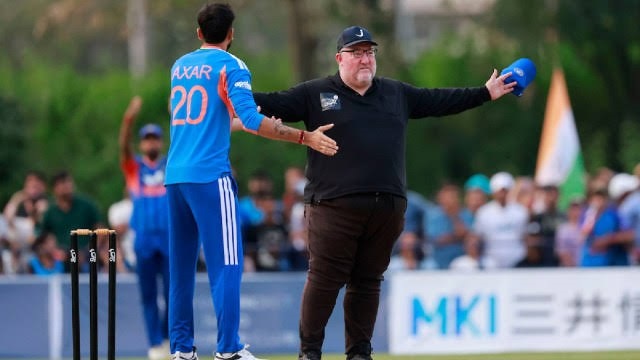
The tension peaked in the final over when Axar was bowling. With Japan needing eight runs, Axar delivered two tight balls, resulting in only a single run in the first two deliveries. On the third ball, he bowled a wide, and then another wide on the next delivery. The second wide caused significant controversy.
Bowling to Alexander Shirai-Patmore, Axar aimed the ball leg-side, but Shirai-Patmore attempted a reverse sweep and missed, leading the umpire to call it a wide. Indian captain Shreyas Iyer and Axar expressed their dissatisfaction with the decision. After a lengthy discussion between the umpires, they overturned the initial wide-call.
If the wide had stood, Japan would have received an extra run and another delivery, potentially altering the match’s outcome. According to MCC Laws of Cricket, a wide can only be called if the ball misses the striker without contact and remains out of reach. In this case, Shirai-Patmore moved to hit the ball, making it no longer a wide. Upon reviewing the delivery, it was evident the ball had crossed the wide mark after bouncing.
This decision shifted momentum in India’s favor, securing their victory in the match.