
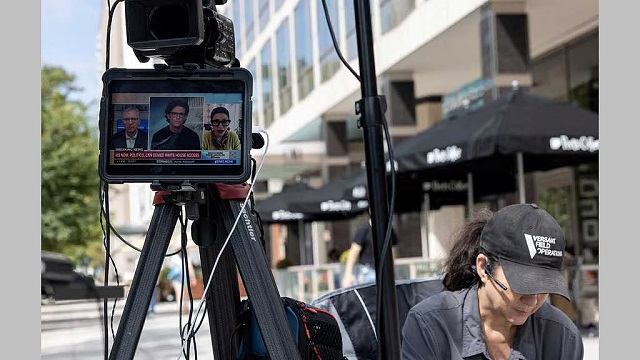
Trump’s Media Ban Faces Legal Challenges
U.S. President Donald Trump’s decision to ban several news outlets from the White House due to his dislike of their coverage is likely illegal, according to legal experts. Trump announced on September 18, 2026, that he would block CNN, MSNOW, and Politico, calling their reporting “FAKE NEWS.” He also hinted at banning more outlets.
Legal experts warn that Trump’s justification for the ban could fail in court. U.S. courts have ruled that the government cannot limit press access based on content or viewpoint once it has granted media entry. University of Maryland professor Lucy Dalglish explained, “The government can’t pick and choose which reporters to include based on their views.”
The White House defended the ban, calling the banned outlets a threat to democracy. However, CNN, MSNOW, and Politico filed a lawsuit in federal court on September 21, claiming the ban violated their First Amendment rights and due process.
U.S. District Judge Timothy Kelly is reviewing the case and scheduled a hearing for September 23. The outlets argue that Trump’s actions are an unconstitutional attack on free speech. They also note that they were given no warning or chance to challenge the decision before their access was revoked.
While presidents have some discretion over press access, especially in limited spaces like the Oval Office, courts have set limits. For example, in 2025, a court ruled that Trump likely had the right to block the Associated Press from certain areas but not all press facilities.
Experts emphasize that the government can restrict reporters only if they pose a security risk, and even then must follow fair procedures. Legal cases like these highlight ongoing tensions between executive power and constitutional rights in the U.S.